
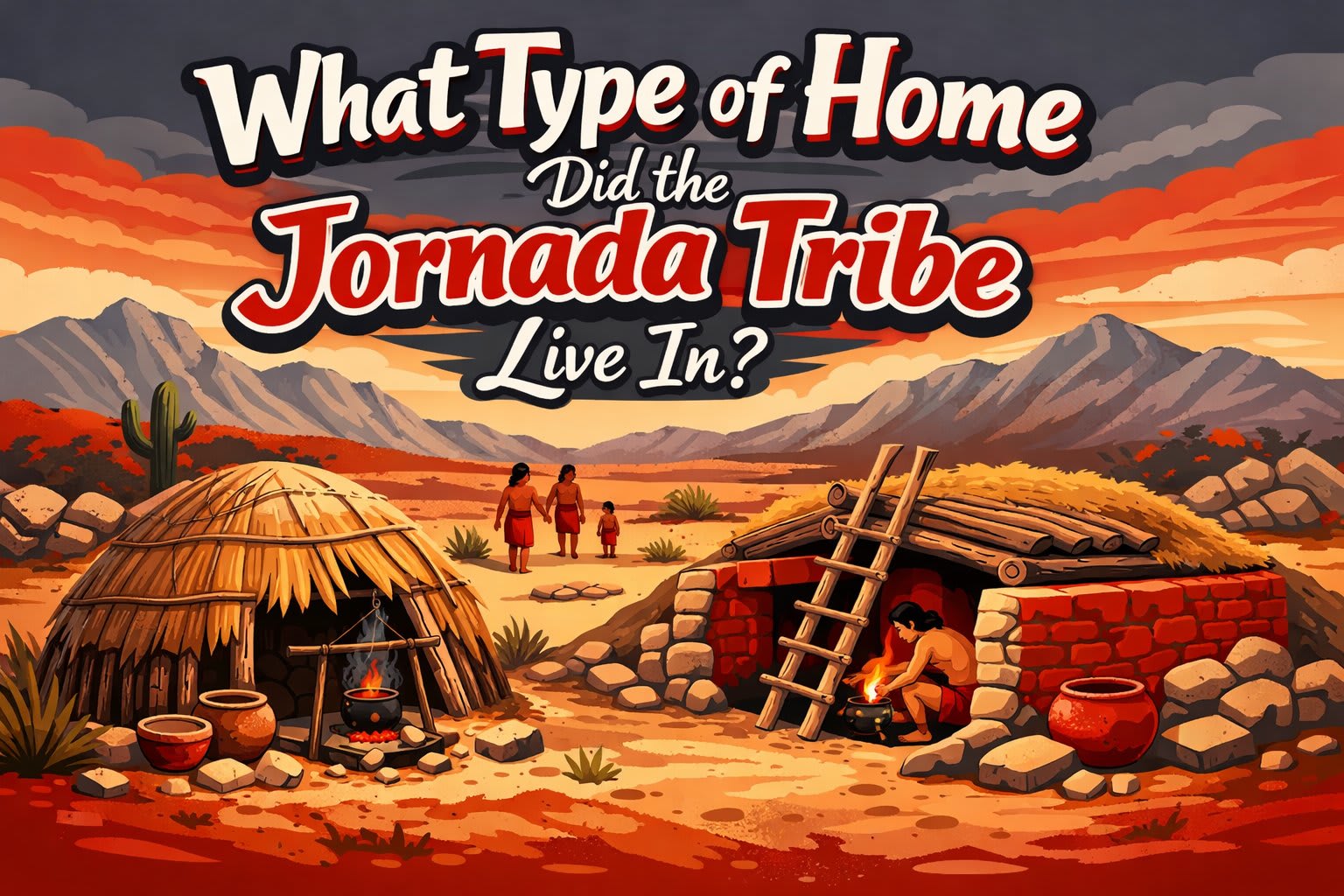
The Jornada Tribe, more accurately known to historians and archaeologists as the Jornada Mogollon people, lived in a region defined by extremes. Stretching across what is now southern New Mexico, far west Texas, and parts of northern Mexico, the Jornada Basin is an arid landscape of deserts, mountains, and scarce water sources. The homes developed by the Jornada people were not merely shelters but sophisticated responses to environmental challenges, social organization, and cultural traditions. Understanding the types of homes they lived in offers valuable insight into their daily lives, technological skills, and long-term adaptation to one of North America’s harshest environments.
Who Were the Jornada People?
The Jornada Mogollon were part of the broader Mogollon cultural tradition, one of the major prehistoric cultural groups of the American Southwest, alongside the Ancestral Puebloans and the Hohokam. The Jornada branch emerged around 200 CE and persisted until approximately 1400 CE. Over this long period, their housing styles evolved significantly, reflecting changes in social complexity, population size, and interaction with neighboring cultures.
The term “Jornada” comes from the Spanish phrase Jornada del Muerto, meaning “Journey of the Dead Man,” a name given to the region by early Spanish explorers due to its difficult and unforgiving terrain. Despite these challenges, the Jornada people developed durable, climate-adapted homes that supported farming, storage, community life, and ceremonial activities.
The Environmental Factors Shaping Jornada Homes
The Jornada Basin is characterized by low rainfall, intense summer heat, cold winter nights, and limited access to timber. These environmental conditions played a critical role in determining how Jornada homes were designed and constructed. Protection from temperature extremes was essential, as was efficient use of locally available materials such as stone, earth, and limited wood.
Because water sources were sparse and often seasonal, Jornada settlements were typically located near reliable springs, rivers, or floodplains. Housing styles reflected the need for permanence in these key locations while also allowing flexibility for seasonal movement related to hunting, gathering, and farming cycles.
Early Jornada Homes: Pithouses
In the early phases of Jornada culture, roughly between 200 CE and 900 CE, the primary type of home was the pithouse. Pithouses were semi-subterranean structures, dug partially into the ground to provide insulation against temperature extremes. These homes were particularly effective in desert climates, staying cooler in the summer and warmer in the winter.
A typical Jornada pithouse consisted of a shallow pit, often circular or oval in shape, with walls reinforced using packed earth, stone slabs, or adobe-like materials. Wooden posts supported a roof made of brush, reeds, and earth. An opening in the roof served as both an entrance and a smoke vent for interior fires.
The floors of pithouses were carefully prepared and sometimes included hearths, storage pits, and work areas. These homes were usually occupied by nuclear or extended family units and were often clustered together in small villages.
Transition to Surface-Level Pueblo Structures
By around 900 CE, the Jornada people began transitioning from pithouses to above-ground masonry structures, reflecting increased social organization and influence from neighboring Puebloan cultures. This shift marked a significant change in how homes were constructed and how communities were organized.
Surface-level homes were typically rectangular and made from stone masonry bonded with mud mortar. Walls were thick, providing excellent insulation, and roofs were flat, supported by wooden beams known as vigas, which were covered with smaller poles, brush, and packed earth.
These above-ground homes were often built in clusters or room blocks, forming small pueblos. The arrangement of rooms suggests planned construction, with shared walls and communal spaces indicating a more complex social structure.
Materials Used in Jornada Home Construction
The Jornada people relied almost entirely on locally available materials. Stone was the most important building material, particularly volcanic rock and limestone found throughout the region. Mud mortar made from local clay and sand was used to bind stones together and seal gaps.
Wood was scarce in the Jornada Basin, so it was used sparingly and strategically. Timber for roof beams was often obtained from distant mountain areas, suggesting organized resource procurement and trade networks. Smaller branches, reeds, and grasses were used for roofing layers and interior features.
Adobe-like mixtures of mud and organic material were sometimes applied to interior walls to create smoother surfaces and improve insulation. These materials demonstrate the Jornada people’s deep understanding of their environment and construction techniques.
Interior Layout and Daily Life Inside the Home
The interior of a Jornada home was multifunctional, designed to support cooking, sleeping, storage, and craft activities. Hearths were central features, used for warmth, cooking, and light. Storage pits and ceramic vessels held maize, beans, squash, and other food supplies.
Sleeping areas were often arranged along the walls, sometimes elevated on platforms or mats. Tools, baskets, and pottery were stored neatly to maximize limited space. The compact and efficient layout reflects the practical needs of daily life in a resource-scarce environment.
In larger pueblos, some rooms may have been used for specialized purposes such as food storage, tool production, or ceremonial activities, indicating a degree of social differentiation within the community.
Community Organization and Village Layout
Jornada villages were typically composed of multiple homes arranged around open courtyards or plazas. These shared spaces were essential for social interaction, food processing, and communal activities. The layout of villages suggests cooperation and coordinated planning among residents.
Some Jornada sites also include larger communal or ceremonial structures, possibly serving religious or social leadership roles. While not as elaborate as the great kivas of other Puebloan groups, these spaces highlight the importance of shared belief systems and rituals.
Seasonal Mobility and Temporary Shelters
Although many Jornada settlements were relatively permanent, the people also practiced seasonal mobility. During hunting or gathering expeditions, temporary shelters such as brush huts or rock shelters were used. These structures were quick to build and provided basic protection from the elements.
Rock shelters, often found along cliffs or canyon walls, were particularly valuable. They required minimal construction and were reused over generations. Archaeological evidence suggests that these shelters supplemented permanent homes rather than replacing them.
Influence from Neighboring Cultures
The housing styles of the Jornada people were influenced by interactions with neighboring Ancestral Puebloan, Hohokam, and Mesoamerican cultures. Trade networks facilitated the exchange of ideas, technologies, and architectural practices.
Over time, Jornada homes began to resemble Puebloan masonry structures more closely, though they retained distinctive regional characteristics. This blending of styles reflects the Jornada people’s adaptability and openness to innovation.
Archaeological Evidence of Jornada Homes
Archaeologists have uncovered numerous Jornada sites featuring pithouses, masonry pueblos, and associated artifacts. Sites such as Hueco Tanks, Alkali Flat, and the Jornada del Muerto region provide detailed insights into construction methods and settlement patterns.
Excavations reveal careful planning, skilled craftsmanship, and long-term occupation, challenging earlier assumptions that desert cultures were simplistic or transient. The durability of Jornada homes underscores their effectiveness and cultural significance.
The Decline and Transformation of Jornada Settlements
By around 1400 CE, many Jornada settlements were abandoned or transformed. Factors contributing to this shift likely included prolonged drought, resource depletion, and social changes. Some Jornada people may have migrated or merged with neighboring Puebloan or Apache groups.
Despite these changes, the architectural legacy of the Jornada people endures in the ruins scattered across the Southwest. Their homes stand as testament to human ingenuity and resilience in the face of environmental adversity.
Conclusion: More Than Just Shelter
The homes of the Jornada Tribe were far more than simple shelters. They were carefully engineered living spaces that balanced environmental demands, social needs, and cultural traditions. From early pithouses to later stone pueblos, Jornada homes evolved alongside the people themselves, reflecting centuries of adaptation and innovation.
By studying these homes, we gain a deeper appreciation for the Jornada people’s knowledge, craftsmanship, and ability to thrive in a challenging landscape. Their architecture remains an important chapter in the broader story of Indigenous cultures of the American Southwest.