
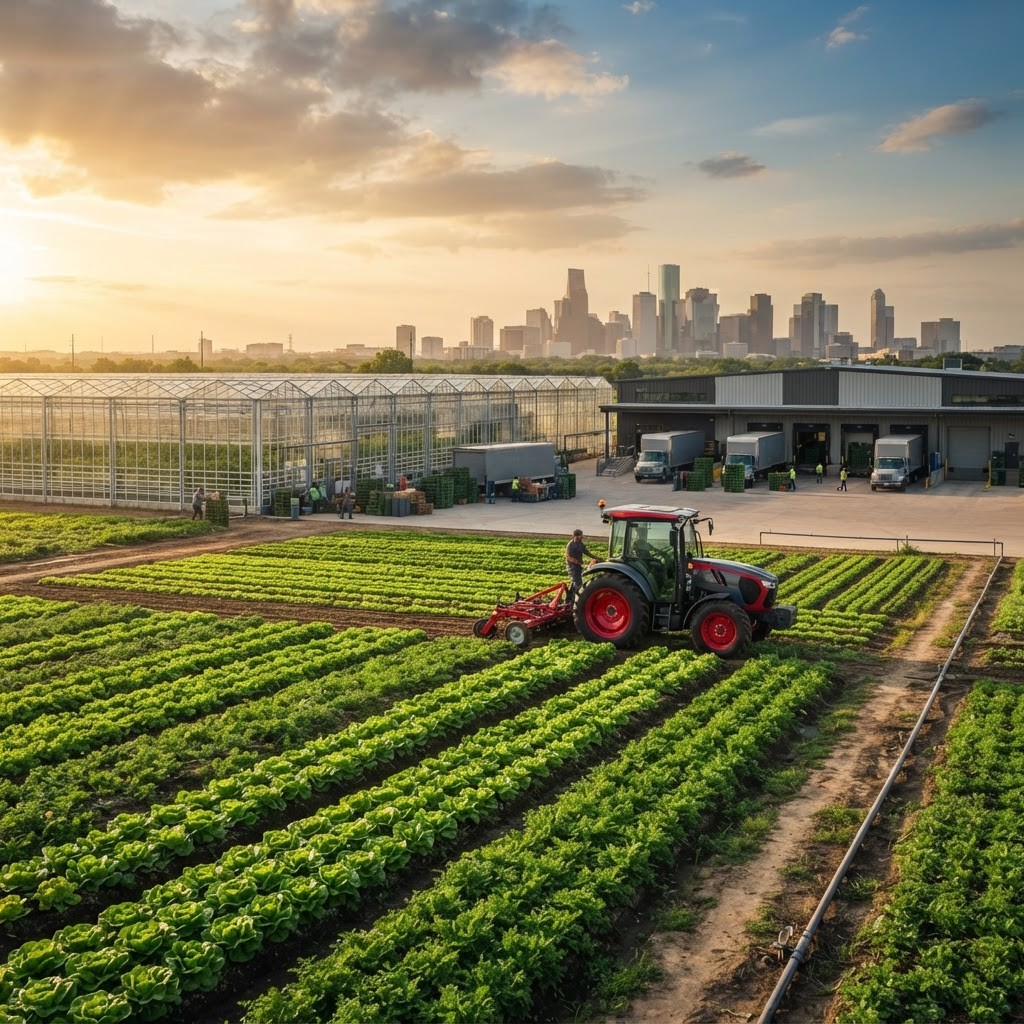
Agriculture in Greater Houston
Houston may be known for energy and aerospace, but agriculture remains important across the Gulf Coast plains surrounding the city. Nearby counties produce rice, cattle, vegetables, nursery crops, and specialty foods, while urban farms bring production and education into neighborhoods. The organizations below represent different parts of the regional ecosystem, from growers to cooperatives and agricultural service providers. Because programs and operations evolve, readers should confirm current offerings directly.
1. Plant It Forward
Plant It Forward supports independent urban farmers and helps connect locally grown produce with Houston consumers. Its model is notable for combining agriculture, entrepreneurship, and community integration. Small-scale diversified farms can supply fresh vegetables while keeping food production visible within the metropolitan area. For customers, seasonal purchasing encourages flexibility; crops vary with weather, planting decisions, and harvest conditions rather than following a fixed supermarket calendar.
2. Finca Tres Robles
Finca Tres Robles is known as an urban farm rooted in Houston's East End. It has contributed to conversations about neighborhood food access, soil stewardship, and community-based agriculture. Urban farms deliver value beyond crop volume by hosting learning, building ecological awareness, and shortening the distance between growers and residents. Their constrained acreage makes intensive planning, healthy soil, and direct-market relationships especially important.
3. Hope Farms
Hope Farms is an urban agricultural initiative associated with Recipe for Success Foundation. The farm connects food production with education, healthy eating, and community engagement. Its presence demonstrates how a working farm can serve as a teaching environment as well as a source of produce. Houston families, students, and culinary partners benefit when agriculture is presented as a practical system involving soil, water, labor, nutrition, and seasonality.
4. Verdegreens Farms
Verdegreens Farms represents controlled-environment agriculture in the Houston area, using greenhouse or hydroponic methods to produce leafy greens and herbs. Controlled systems can reduce exposure to some weather risks and use water efficiently, while enabling consistent quality close to the market. However, they require careful energy, nutrient, sanitation, and equipment management. Buyers value freshness and predictable specifications, particularly for restaurants and retail programs.
5. Atkinson Farms
Atkinson Farms is a well-known family farming operation north of Houston associated with strawberries and seasonal produce. Direct farm experiences and seasonal sales help residents understand local harvest windows. Strawberries and other perishable crops demand careful picking, cooling, and handling to preserve quality. Weather can shift harvest timing, so customers and wholesale buyers should expect variation and plan communication around actual field conditions.
6. Froberg's Farm
Froberg's Farm in the Alvin area is a prominent regional farm market and seasonal destination. It is associated with produce, pick-your-own experiences, and family-oriented agricultural activities. Agritourism diversifies farm income while helping the public connect with working land. Successful operations balance visitor safety and hospitality with the realities of planting, irrigation, harvest labor, and unpredictable Gulf Coast weather.
7. Jenschke Orchards
Jenschke Orchards is a Texas agricultural operation known for peaches and other seasonal crops, with relevance to Houston consumers seeking regional produce. Orchard farming requires long-term investment, pruning, pest management, chilling conditions, and careful harvest timing. Regional suppliers can add variety to farmers markets and produce programs even when they are outside the immediate metro. Buyers should appreciate that exceptional fruit is inherently seasonal.
8. Riviana Foods
Houston-based Riviana Foods is a major rice company with brands and processing capabilities linked to agriculture. While not a farm in the narrow sense, it is a significant participant in the farm-to-market chain. Rice has deep historical importance along the Texas Gulf Coast, and processors connect growers with foodservice, retail, and international markets. Quality systems, storage, milling, packaging, and logistics transform a harvested crop into consistent consumer products.
9. Producers Cooperative Association
Producers Cooperative Association serves agricultural producers with feed, agronomy, animal health, fuel, and related services. Cooperatives and farm suppliers are essential because growers need dependable inputs, technical knowledge, and markets. Houston-area livestock and landowners may use such organizations for feed and production support. Input decisions should be based on soil tests, animal requirements, label directions, and professional guidance rather than routine alone.
10. The Ground Up
The Ground Up is a Houston-area supplier associated with soils, composts, mulches, and landscape materials. Healthy soil products support farms, gardens, landscapers, and restoration projects. Compost and appropriate amendments can improve soil structure and water management, but material selection should follow testing and the needs of the crop. In Houston's heavy clay and intense rainfall, drainage and organic matter management are often central concerns.
Trends Shaping Houston Agriculture
Regional farming is adapting to heat, flooding, land pressure, labor constraints, and consumer demand for transparent sourcing. Controlled environments, efficient irrigation, soil-building, direct sales, agritourism, and institutional purchasing all offer opportunities. At the same time, no single method fits every crop or scale. Buyers can strengthen the local food economy by planning seasonally, accepting reasonable cosmetic variation, and maintaining fair, consistent purchasing relationships.
Choosing Agricultural Partners
Restaurants, grocers, schools, and families should ask about harvest schedules, food-safety practices, packaging, delivery, production methods, and contingency plans. Agricultural companies should be evaluated according to their role: a farm, processor, cooperative, and soil supplier provide different forms of value. Houston's future food resilience depends on this whole network. The strongest partners communicate honestly about availability, invest in land and people, and deliver products that are safe, useful, and appropriate for the region.