
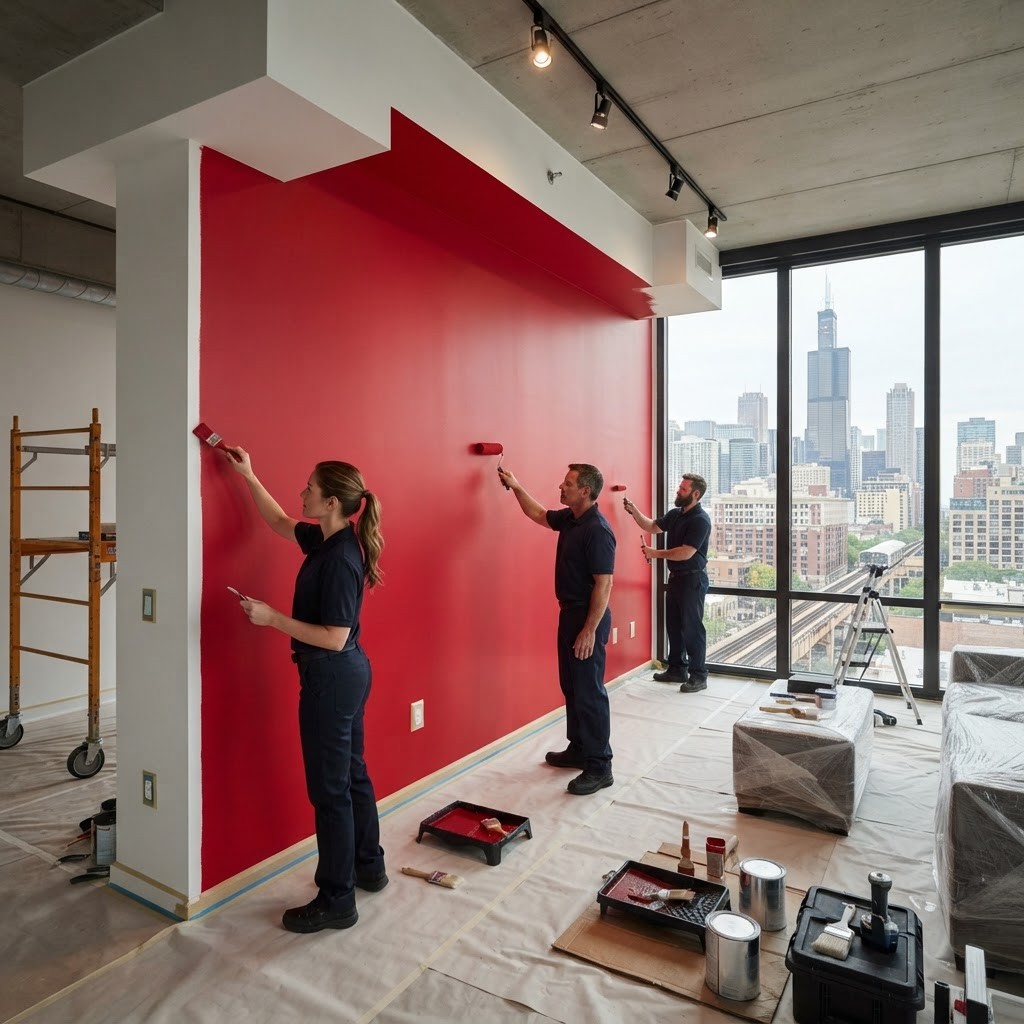
Why Professional Preparation Matters
Chicago properties present painting challenges ranging from cracked plaster and vintage woodwork to exposed masonry and weathered exteriors. Temperature, humidity, previous coatings, and substrate condition all affect adhesion and appearance. Strong contractors protect surrounding surfaces, correct defects, select compatible products, and apply coatings under appropriate conditions. These ten companies serve different residential and commercial needs across the metropolitan area.
1. Improovy Painters Chicago
Improovy serves residential and commercial clients with interior and exterior painting. Its process emphasizes convenient estimating, project coordination, and defined communication. The company is relevant for homeowners who want a managed experience across preparation, painting, and final walkthrough.
2. Windy City Painters
Windy City Painters provides interior and exterior painting in Chicago, including residential and commercial work. Local experience supports familiarity with common plaster, masonry, trim, and condominium conditions. Clients should ask how repairs and surface preparation are distinguished from basic painting in the proposal.
3. Chicago Painters
Chicago Painters handles home and business painting projects across the city. Services typically include walls, ceilings, trim, exteriors, and related preparation. A company accustomed to occupied properties should have clear plans for dust control, daily cleanup, access, and sequencing.
4. Thomas Painting Service
Thomas Painting Service is an established Chicago-area provider of residential and commercial painting. Its experience includes interior and exterior applications and the detailed preparation necessary for older surfaces. Longevity in the local market can be helpful when evaluating regional product performance.
5. Fine Painting
Fine Painting focuses on high-quality residential and commercial finishes. Projects involving detailed trim, cabinetry, or premium interiors benefit from careful sanding, priming, and application methods. Clients seeking a refined result should request a representative sample area before full production.
6. Greenworks Painting
Greenworks Painting serves Chicago properties with interior and exterior work and an emphasis on responsible product choices. Low-odor and lower-emission coatings can be valuable in occupied homes, workplaces, and sensitive environments. Product selection should still account for durability, cleaning, and substrate compatibility.
7. Lookswell Painting
Lookswell Painting provides residential and commercial painting and decorating services. Its broader capabilities can support projects involving wallcoverings, specialty finishes, or detailed restoration. Experienced decorators are useful when color, sheen, texture, and architectural details must be coordinated.
8. Artisons Painting and Remodeling
Artisons combines painting with remodeling and surface-repair capabilities. This is helpful when walls require more than minor patching or when painting follows broader improvements. Coordinating repair and finish work under one team can reduce handoff problems and inconsistent expectations.
9. Blue Door Painting
Blue Door Painting serves Chicago and nearby communities with residential and commercial painting. The company handles interior, exterior, and cabinet-related scopes. For cabinet refinishing, clients should ask about removal, cleaning, curing, spray environment, and the coating system used on high-touch surfaces.
10. CertaPro Painters
CertaPro Painters operates through locally managed businesses and offers residential and commercial painting. Standardized systems and a broad service range may appeal to clients who want structured estimating and scheduling. As with any provider, evaluate the specific local team and proposed crew for the job.
Current Painting and Coating Trends
Clients are choosing warmer neutrals, deep accent colors, mineral-inspired finishes, and lower-sheen walls. Cabinet refinishing remains popular as an alternative to replacement. Commercial owners increasingly use durable, washable, and low-emission coatings, while exterior projects benefit from products engineered for masonry and fluctuating Midwestern weather. Color consultation and digital visualization can help narrow choices, but physical samples remain essential because Chicago’s seasonal light changes perception.
Comparing Painting Estimates
Ask each contractor to describe washing, scraping, sanding, patching, caulking, priming, number of finish coats, and exact product line. Confirm whether moving furniture, removing hardware, repairing plaster, or painting closets and trim is included. Review insurance, lead-safe practices where applicable, cleanup, and warranty terms. Extremely low bids often omit preparation or assume fewer coats. A professional painter provides a transparent scope, maintains an orderly site, and checks the completed surfaces under realistic lighting before closeout.
Planning for a Successful Chicago Project
Before work starts, owners should document existing conditions and define who is responsible for design, permits, material selections, access, protection, inspections, and final cleanup. Chicago schedules should account for building management rules, neighborhood constraints, seasonal weather, and products with long manufacturing lead times. It is wise to keep a reasonable contingency for concealed conditions, especially in older properties. Written meeting notes, current drawings, approved samples, and a shared decision log reduce misunderstandings as work progresses.
References are most useful when they come from recent projects with a similar building type and scope. Ask those clients whether the team maintained the site, communicated upcoming decisions, handled changes fairly, and returned promptly for closeout items. Review the contract carefully and avoid relying on verbal assumptions. Payment milestones should correspond to verifiable progress, while warranties should identify both covered work and the process for requesting service. Finally, remember that a ranked list is a starting point rather than a substitute for due diligence. Availability, staffing, and company focus can change. Interview multiple qualified providers, compare equivalent scopes, verify current credentials, and choose the team that demonstrates technical competence, transparent communication, and a realistic understanding of the project.