
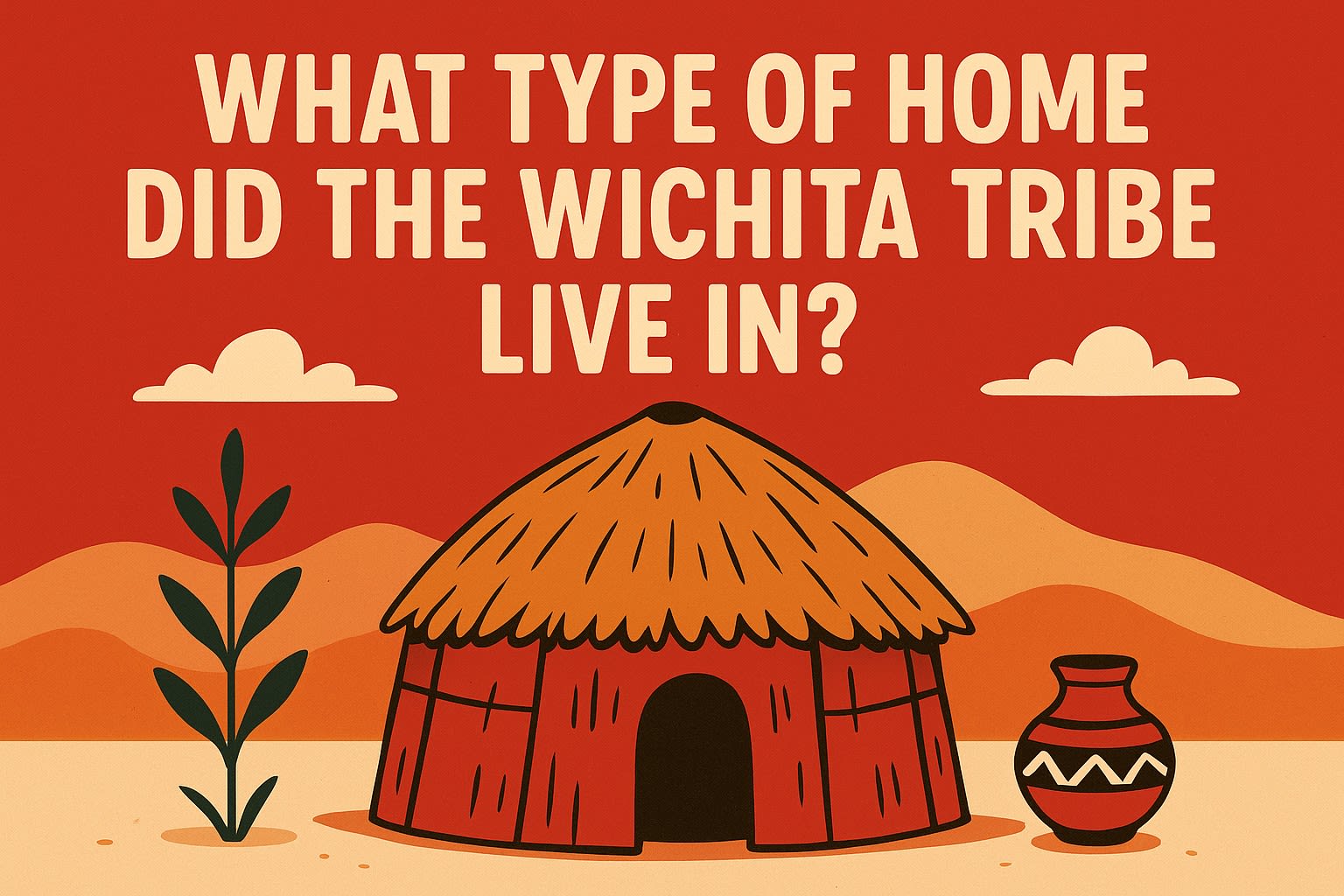
The Wichita Tribe, a Native American people indigenous to the Southern Plains of North America, developed a distinctive and highly functional style of housing that reflected their environment, economy, and social organization. Their homes were not merely shelters but carefully designed structures that embodied cultural values, seasonal rhythms, and deep ecological knowledge. Understanding what type of home the Wichita lived in provides insight into their agricultural lifestyle, village-based society, and adaptation to the Plains region long before European contact.
This article explores in depth the types of homes the Wichita Tribe lived in, how those homes were constructed, why they were designed the way they were, and how they fit into the broader cultural and historical context of the Wichita people. From materials and architectural techniques to seasonal use and symbolic meaning, Wichita housing reveals a great deal about who they were as a people.
Who Were the Wichita People
The Wichita were a confederation of related tribes, including the Tawakoni, Taovaya, Waco, and Kichai, who spoke dialects of the Caddoan language family. Historically, they lived in what is now present-day Kansas, Oklahoma, northern Texas, and parts of Arkansas. Archaeological evidence places their ancestors in the region for hundreds of years before European arrival.
Unlike many Plains tribes who were primarily nomadic hunters, the Wichita were semi-sedentary agriculturalists. They farmed crops such as corn, beans, squash, sunflowers, and tobacco while also hunting bison and other game. This mixed economy strongly influenced the type of homes they built, as their villages needed to be stable enough for long-term residence yet adaptable to seasonal movements.
The Primary Wichita Home: The Grass House
The most characteristic and well-documented Wichita dwelling was the grass house. These structures were large, dome-shaped homes constructed primarily from grass, wood, and earth. Early European explorers, including Spanish and French visitors, often remarked on the size and sophistication of Wichita grass houses, sometimes comparing them to beehives or large haystacks.
Grass houses were not temporary shelters. They were durable, carefully engineered structures designed to last many years. Some accounts suggest that a well-built grass house could remain functional for a decade or more with proper maintenance.
Materials Used in Wichita Grass Houses
The Wichita made use of locally available materials, demonstrating a deep understanding of their environment. The main structural elements of their homes included wooden poles, grasses, reeds, and sometimes mud or earth for insulation.
Wooden poles formed the framework of the house. These were typically cut from nearby forests along river valleys, where trees such as cottonwood, willow, and elm were abundant. The poles were arranged in a circular pattern and bent inward to create a domed frame.
The exterior covering consisted primarily of tall prairie grasses. These grasses were bundled and tied onto the wooden framework in thick layers. In some cases, reeds or rushes from riverbanks were also used. The thickness of the grass covering provided excellent insulation, keeping the interior warm in winter and cool in summer.
Mud or earth was sometimes added to the lower portions of the walls to block drafts and improve durability, especially during colder months.
Construction Techniques and Design
Building a grass house was a communal effort that required skill, planning, and cooperation. Construction usually began with clearing and leveling a circular area. Holes were dug around the perimeter to set the main support poles firmly into the ground.
Once the poles were in place, they were bent inward and tied together at the top, forming a strong, dome-like skeleton. Smaller horizontal poles or wooden laths were then woven through the vertical supports to stabilize the frame.
Grass bundles were layered from the bottom upward, much like shingles on a roof. This overlapping technique allowed rainwater to run off easily while preventing leaks. The thick grass covering also reduced wind penetration, an important feature on the open Plains.
The entrance was usually a low, narrow opening, sometimes extended into a short passageway. This design minimized heat loss and protected the interior from strong winds.
Size and Interior Layout of Wichita Homes
Wichita grass houses were notably large. Some measured up to 40 feet in diameter and could house extended families. Unlike smaller dwellings used by many nomadic tribes, these homes accommodated multiple generations living together.
The interior was organized around a central hearth, which served as the primary source of heat and light. Smoke escaped through a small opening at the top of the dome. Sleeping areas were arranged around the perimeter, often marked by mats, hides, or raised platforms.
Storage areas for food, tools, and personal belongings were incorporated into the walls or placed along the edges of the interior. Corn, beans, and squash were often stored in large baskets or clay-lined pits near the house.
Seasonal Use of Wichita Housing
The Wichita were semi-sedentary, meaning they lived in permanent villages for much of the year but also traveled seasonally. Grass houses were primarily used during the agricultural seasons, from spring through fall, when families tended their crops.
During winter bison hunts or extended hunting expeditions, some Wichita groups temporarily left their villages and used lighter, more portable shelters such as tipis or brush shelters. However, the grass house remained the central and most important home structure in Wichita life.
When families returned from seasonal hunts, they came back to the same villages and homes, reinforcing a strong sense of place and continuity.
Village Organization and Community Life
Wichita villages were composed of multiple grass houses arranged in clusters or loose circles. Villages were often located near rivers or streams, providing access to water, fertile soil, and transportation routes.
In addition to family homes, villages included communal structures, open plazas, and ceremonial spaces. These areas were used for social gatherings, religious ceremonies, trade, and decision-making.
The layout of the village reflected social relationships and kinship ties. Extended families often lived near one another, strengthening cooperation in farming, construction, and childcare.
Cultural and Symbolic Meaning of the Grass House
Beyond their practical function, grass houses held cultural and symbolic significance for the Wichita. The circular shape of the home reflected broader Native American concepts of balance, harmony, and the cyclical nature of life.
The central hearth symbolized family unity and continuity, serving as the heart of the household. The dome shape, enclosing the family beneath a single roof, reinforced ideas of protection and community.
Building and maintaining a home was also a way of passing down knowledge across generations. Elders taught younger members how to select materials, tie grass bundles, and repair damage, ensuring cultural continuity.
Comparison With Other Plains Tribe Homes
Wichita grass houses differed significantly from the more widely known Plains tipi. While tipis were designed for frequent movement and quick assembly, grass houses emphasized stability and long-term use.
Compared to earth lodges used by tribes such as the Mandan or Hidatsa, Wichita homes were lighter and relied more heavily on grass than soil. This made them better suited to the southern Plains environment, where heavy timber and thick sod were less abundant.
The Wichita housing style represents a unique adaptation that blends Plains and Woodland influences, reflecting their position at a cultural crossroads.
Impact of European Contact on Wichita Housing
European contact brought profound changes to Wichita life, including their housing traditions. Disease, warfare, and displacement reduced population sizes and disrupted village life.
As the Wichita were forced onto reservations in the nineteenth century, traditional grass houses gradually gave way to log cabins, frame houses, and other Euro-American structures. Government policies often discouraged or outright banned traditional building practices.
Despite these pressures, historical accounts, archaeological evidence, and oral traditions preserve detailed knowledge of Wichita housing and its importance.
Archaeological Evidence of Wichita Homes
Archaeologists have uncovered remains of Wichita villages across Kansas, Oklahoma, and Texas. Postholes, hearths, storage pits, and artifact distributions provide strong evidence of large, circular grass houses.
These findings confirm descriptions from early explorers and offer insight into village size, population density, and construction methods. Archaeology has played a crucial role in validating Wichita oral histories and preserving their architectural legacy.
Modern Wichita Perspectives on Traditional Homes
Today, the Wichita and Affiliated Tribes, headquartered in Oklahoma, continue to honor their ancestral heritage. While grass houses are no longer used as everyday dwellings, they are sometimes reconstructed for educational, cultural, and ceremonial purposes.
These reconstructions help teach younger generations about traditional lifeways and allow the broader public to better understand Wichita history. Cultural preservation efforts emphasize that traditional housing was an expression of identity, resilience, and environmental knowledge.
Why Wichita Homes Matter Today
Studying Wichita housing is not simply an exercise in architectural history. It offers lessons in sustainability, community-centered living, and adaptation to local environments.
The grass house was built entirely from renewable materials, produced minimal environmental impact, and provided comfort without modern technology. Its design reflected centuries of accumulated knowledge about climate, resources, and social needs.
In a modern world increasingly concerned with sustainable living and cultural preservation, Wichita homes stand as a powerful example of indigenous ingenuity.
Conclusion
The Wichita Tribe lived in large, dome-shaped grass houses that were carefully designed to meet the needs of an agricultural, village-based society on the Southern Plains. Constructed from wood and thick layers of prairie grass, these homes were durable, insulated, and well-suited to the region’s climate.
More than shelters, Wichita homes were centers of family life, symbols of cultural values, and expressions of deep environmental understanding. Though no longer used as everyday dwellings, they remain an important part of Wichita identity and history.
By examining what type of home the Wichita lived in, we gain a richer appreciation for their way of life and the sophisticated solutions they developed long before modern architecture and engineering.