
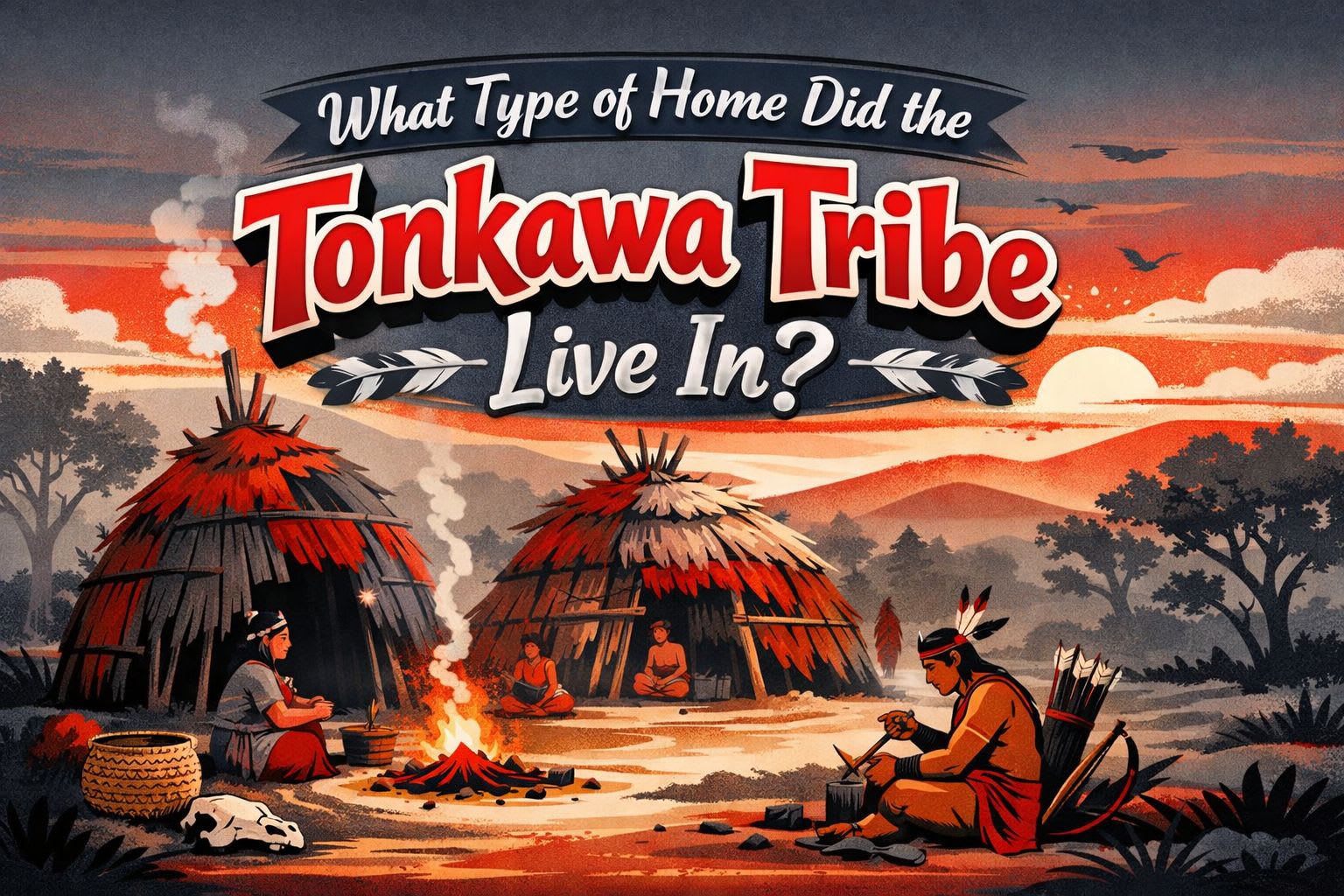
The Tonkawa tribe, a Native American people historically associated with central and northern Texas and parts of present-day Oklahoma, developed distinctive forms of housing that reflected their environment, lifestyle, and cultural values. Understanding what type of home the Tonkawa lived in provides insight not only into their architectural practices but also into their social organization, seasonal movements, and relationship with the land. Their homes were not permanent stone structures or large villages like those of some agricultural tribes; instead, Tonkawa dwellings were practical, mobile, and well adapted to a semi-nomadic way of life centered on hunting, gathering, and seasonal travel.
This article explores the types of homes the Tonkawa tribe lived in, the materials they used, how their dwellings were constructed, and how these homes fit into the broader context of Tonkawa culture and daily life. By examining historical records, oral traditions, and anthropological research, we can gain a fuller picture of how Tonkawa housing evolved and why it was so well suited to their needs.
Who Were the Tonkawa People
Before examining Tonkawa housing, it is important to understand who the Tonkawa were and how they lived. The Tonkawa were a small but resilient tribe known for their adaptability and survival skills. They lived primarily in what is now central Texas, though their territory shifted over time due to conflicts, alliances, and pressure from other tribes and European settlers.
The Tonkawa were traditionally hunter-gatherers, relying heavily on bison, deer, small game, roots, nuts, and seasonal plants. They did not practice large-scale agriculture like some other tribes in the region, which influenced the types of homes they built. Because food sources changed with the seasons, the Tonkawa often moved from place to place, following game and natural resources. This semi-nomadic lifestyle required homes that could be built quickly, dismantled easily, and transported without excessive effort.
The Primary Type of Tonkawa Home
The primary home of the Tonkawa tribe was a dome-shaped hut often referred to by historians as a wickiup or brush hut. These structures were simple yet highly functional, designed to offer protection from the elements while remaining lightweight and portable. Unlike tipis used by Plains tribes or longhouses used by Woodland tribes, Tonkawa homes were typically smaller and lower to the ground.
The Tonkawa wickiup was well suited to the climate of Texas, which includes hot summers, cool winters, and occasional heavy rains. The rounded shape of the home helped deflect wind, while the natural materials provided insulation and ventilation. These homes were usually constructed by women, who possessed extensive knowledge of local plants and building techniques.
Materials Used in Tonkawa Homes
The Tonkawa used materials that were readily available in their environment. This approach not only made construction efficient but also ensured that homes could be rebuilt wherever the tribe traveled. Common materials included flexible wooden poles, brush, grasses, reeds, and animal hides.
The framework of a Tonkawa home was typically made from bent saplings or young tree branches. These were pushed into the ground in a circular pattern and then bent inward to form a dome shape. The frame was secured using rawhide strips, plant fibers, or sinew. Once the framework was complete, it was covered with layers of brush, grass, or reeds. In colder weather, animal hides such as buffalo or deer skins might be added for extra insulation.
This use of natural materials allowed Tonkawa homes to blend into the surrounding landscape, providing a degree of camouflage as well as protection from heat and cold. When the tribe moved on, the materials could be left behind to return to the earth or reused by other groups.
Construction and Design of the Wickiup
The design of the Tonkawa wickiup was both practical and efficient. The circular floor plan maximized interior space while minimizing the amount of material needed. The dome shape also helped shed rain and withstand strong winds, which were common in the open plains and river valleys where the Tonkawa lived.
A small opening served as the doorway, often covered with a hide or woven mat. This entrance could be adjusted to face away from prevailing winds or toward the rising sun, depending on the season and location. At the top of the structure, a small smoke hole allowed smoke from the interior fire to escape. This opening could be adjusted or partially covered to control airflow.
Inside the wickiup, the space was simple but carefully organized. Sleeping areas were arranged along the walls, often lined with grass mats or animal skins. Personal belongings, tools, and clothing were stored in small bundles or hung from the framework. The central fire was used for cooking, warmth, and light, making it the heart of the home.
Seasonal Variations in Tonkawa Housing
The Tonkawa adapted their homes to different seasons, modifying construction methods and materials as needed. During warmer months, the coverings of the wickiup might be lighter and more breathable, using grasses and reeds that allowed air to circulate. These summer shelters were designed to keep the interior cool and shaded.
In winter, Tonkawa homes were reinforced with additional layers of brush and hides to provide better insulation. The doorway might be made smaller to retain heat, and the interior fire would be used more frequently. In especially cold conditions, families might cluster their homes closer together for added warmth and protection.
This seasonal flexibility demonstrates the Tonkawa’s deep understanding of their environment and their ability to adjust their living spaces to changing conditions without relying on permanent structures.
Mobility and the Semi-Nomadic Lifestyle
The type of home the Tonkawa lived in was closely tied to their semi-nomadic lifestyle. Because they followed seasonal food sources, they could not afford to build heavy, permanent houses. Instead, their wickiups were designed to be erected quickly, often in a single day, and dismantled just as easily.
When moving camp, the Tonkawa would take only essential items with them, leaving behind the framework or coverings if necessary. In some cases, the wooden frames might be reused if the tribe planned to return to the area later. This flexibility allowed the Tonkawa to respond quickly to changes in weather, game availability, or threats from enemies.
The lightweight nature of Tonkawa housing also meant that families could travel independently or in small groups, rather than being tied to large villages. This mobility was a key survival strategy in a region where resources could be unpredictable.
Differences Between Tonkawa Homes and Tipis
The Tonkawa are sometimes mistakenly associated with tipis, but their homes were quite different from those of Plains tribes such as the Comanche or Lakota. Tipis were taller, conical structures covered primarily with buffalo hides and supported by long poles. They were designed for life on the open plains and could be transported using horses and travois.
In contrast, Tonkawa wickiups were lower, dome-shaped, and made mostly from plant materials. They did not require horses for transport and could be built using local resources. This difference reflects the Tonkawa’s unique cultural identity and ecological niche, which combined elements of Plains and Southwestern lifeways.
Understanding these distinctions helps prevent oversimplification and highlights the diversity of Native American housing traditions.
Social and Family Life Within the Home
Tonkawa homes were typically occupied by nuclear families, though extended family members might camp nearby. The size of the wickiup reflected the size of the family, with larger structures built when needed. Despite their modest size, these homes were places of warmth, storytelling, and daily activity.
Children learned important skills within and around the home, such as preparing food, making tools, and listening to elders’ stories. The home was also a place for teaching cultural values, spiritual beliefs, and survival knowledge. In this way, the Tonkawa dwelling served not just as a shelter but as a center of cultural transmission.
Spiritual and Cultural Significance of the Home
For the Tonkawa, the home was more than a physical structure. It represented safety, family unity, and a connection to the natural world. The circular shape of the wickiup reflected broader Indigenous concepts of balance and harmony, mirroring the cycles of nature and life.
Fires within the home were treated with respect, as fire was considered a powerful and essential element. The careful placement of the entrance and the maintenance of the structure reflected an understanding that the home was part of a larger spiritual landscape.
While the Tonkawa did not build permanent ceremonial structures, their everyday homes still held cultural meaning and were maintained with care and intention.
Changes After European Contact
After European contact and the expansion of American settlement, the Tonkawa way of life changed dramatically. Forced relocations, disease, and conflict reduced their population and disrupted traditional housing practices. As the Tonkawa were pushed onto reservations, they were often required to live in government-issued houses or adopt Euro-American building styles.
Despite these changes, knowledge of traditional Tonkawa homes has been preserved through oral history, ethnographic records, and cultural revitalization efforts. Today, the Tonkawa Tribe of Oklahoma continues to honor its heritage, including the traditional ways their ancestors lived and built their homes.
Why Tonkawa Homes Were Perfectly Suited to Their Environment
The type of home the Tonkawa tribe lived in was a direct response to their environment, resources, and lifestyle. The wickiup was efficient, sustainable, and adaptable, requiring no permanent alteration of the land. It provided protection without excess, demonstrating a philosophy of living in balance with nature.
These homes allowed the Tonkawa to thrive in a challenging landscape for generations. Their design reflects deep ecological knowledge and cultural wisdom, showing that even simple structures can meet complex human needs when thoughtfully created.
Conclusion
The Tonkawa tribe lived in dome-shaped wickiups made from wood, brush, grass, and animal hides. These homes were lightweight, portable, and well suited to a semi-nomadic hunting and gathering lifestyle. Far from being primitive, Tonkawa dwellings were carefully designed structures that reflected an intimate understanding of the land and climate.
By studying the homes of the Tonkawa, we gain a deeper appreciation for their ingenuity, resilience, and cultural identity. Their housing traditions remind us that shelter is not just about walls and roofs, but about adaptability, community, and respect for the natural world.