
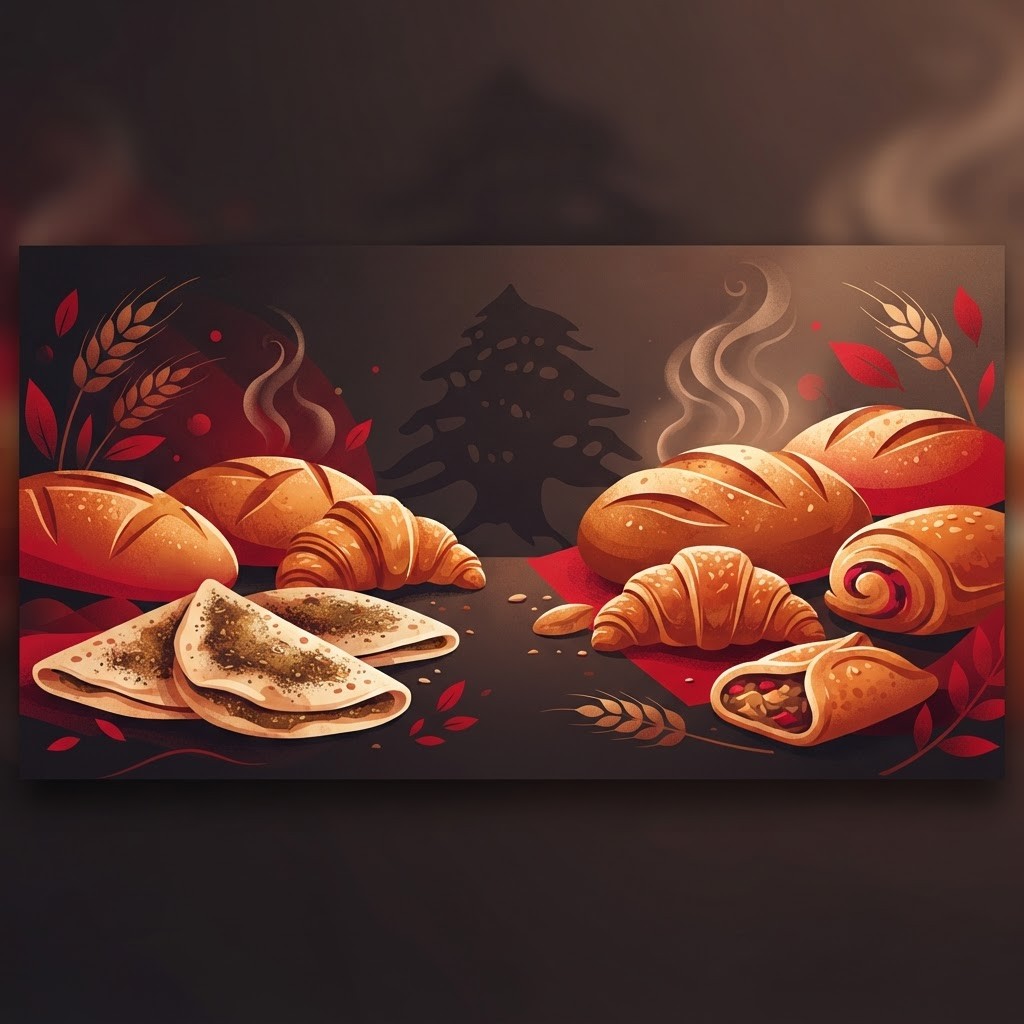
A Nation That Loves Its Bread
Few things are as central to Lebanese daily life as fresh bread and pastries. From the warm rounds of manoushe eaten at breakfast to the flaky layers of baklava served at celebrations, baked goods hold a cherished place in the country's culture and cuisine. Lebanon's bakeries range from humble neighborhood ovens turning out traditional flatbread to elegant patisseries crafting French-influenced desserts, and together they form a rich culinary tapestry that delights locals and visitors alike.
The Lebanese baking tradition draws on centuries of history and a crossroads location that blended Mediterranean, Arab, and European influences. The result is a remarkable diversity of breads, pastries, and sweets, each with its own story and technique passed down through generations.
The Heart of Lebanese Baking
At the core of Lebanese baking is the manoushe, a flatbread topped with zaatar, cheese, or meat and baked to order in a hot oven. Bakeries specializing in this beloved staple, known as furn, are found in nearly every neighborhood, serving as social hubs where locals gather in the morning. The aroma of freshly baked bread and herbs is an unmistakable part of daily life across the country.
Beyond manoushe, Lebanese bakeries produce a wide array of breads, from pita to specialty loaves, as well as savory pastries like fatayer and sfiha. Sweets occupy an equally important place, with baklava, maamoul, knafeh, and countless other confections showcasing the artistry of Lebanese bakers.
Celebrated Bakeries Across Lebanon
Wooden Bakery has grown into a beloved chain known for its consistent quality, offering fresh breads, pastries, and a cafe experience across many locations throughout the country.
Al Forno and traditional neighborhood furn ovens serve communities with authentic manoushe and daily bread, embodying the everyday soul of Lebanese baking.
Patchi, while world-famous for chocolate, reflects the Lebanese mastery of sweets and confectionery that overlaps with the country's celebrated dessert culture.
Al Baba and Amal Bohsali are historic names renowned for Arabic sweets, with Amal Bohsali in particular being a legendary institution famous for baklava and traditional confections crafted for over a century.
Douaihy sweets from the north and Hallab from Tripoli are legendary destinations for knafeh and Arabic pastries, drawing visitors from across the country to sample their signature creations.
Modern patisseries such as Cannelle and elegant French-style bakeries bring refined croissants, tarts, and cakes to Beirut's discerning diners, while countless family-run bakeries in towns and villages preserve regional specialties and cherished recipes.
Tradition Meets Innovation
What makes Lebanese bakeries special is the way they honor tradition while embracing innovation. Time-tested recipes for maamoul and baklava are prepared with the same care they have received for generations, using quality ingredients like pistachios, semolina, rosewater, and clarified butter. At the same time, contemporary bakeries experiment with new flavors, healthier options, and creative presentations that appeal to modern tastes.
This balance keeps the baking scene vibrant. Established institutions maintain the authenticity that customers treasure, while newer establishments push boundaries, ensuring that Lebanese baking continues to evolve without losing its essential character.
The Craft Behind the Flavors
Behind every great Lebanese bakery is genuine craftsmanship. Skilled bakers master the timing and technique needed to produce perfect flatbread, the delicate layering of phyllo for baklava, and the precise sweetness of syrup-soaked desserts. Many of these skills are learned through years of apprenticeship, passed from master to apprentice in a tradition that values patience and dedication.
Quality ingredients are essential to the results. The finest bakeries source fresh dairy, premium nuts, and fragrant flavorings, understanding that the character of a pastry depends on what goes into it. This commitment to quality is what separates memorable baked goods from the ordinary.
A Feast for Every Occasion
Lebanese baked goods are woven into every occasion. Maamoul cookies mark religious holidays, elaborate trays of sweets grace weddings and celebrations, and fresh manoushe fuels the start of countless ordinary days. Bakeries play a central role in these moments, providing the treats that bring families and communities together.
This deep cultural connection ensures that bakeries remain beloved institutions. They are more than businesses; they are keepers of tradition and gathering places that nourish both body and community spirit.
Savoring Lebanon's Baking Heritage
For anyone exploring Lebanese cuisine, the country's bakeries offer an irresistible introduction to its flavors and culture. Whether enjoying a simple zaatar manoushe from a neighborhood furn or savoring an exquisite piece of knafeh from a historic sweet shop, visitors experience the warmth and generosity that define Lebanese hospitality. The bakeries celebrated here represent the best of a proud tradition, and they continue to bring joy to tables across Lebanon and beyond, one freshly baked delight at a time.