
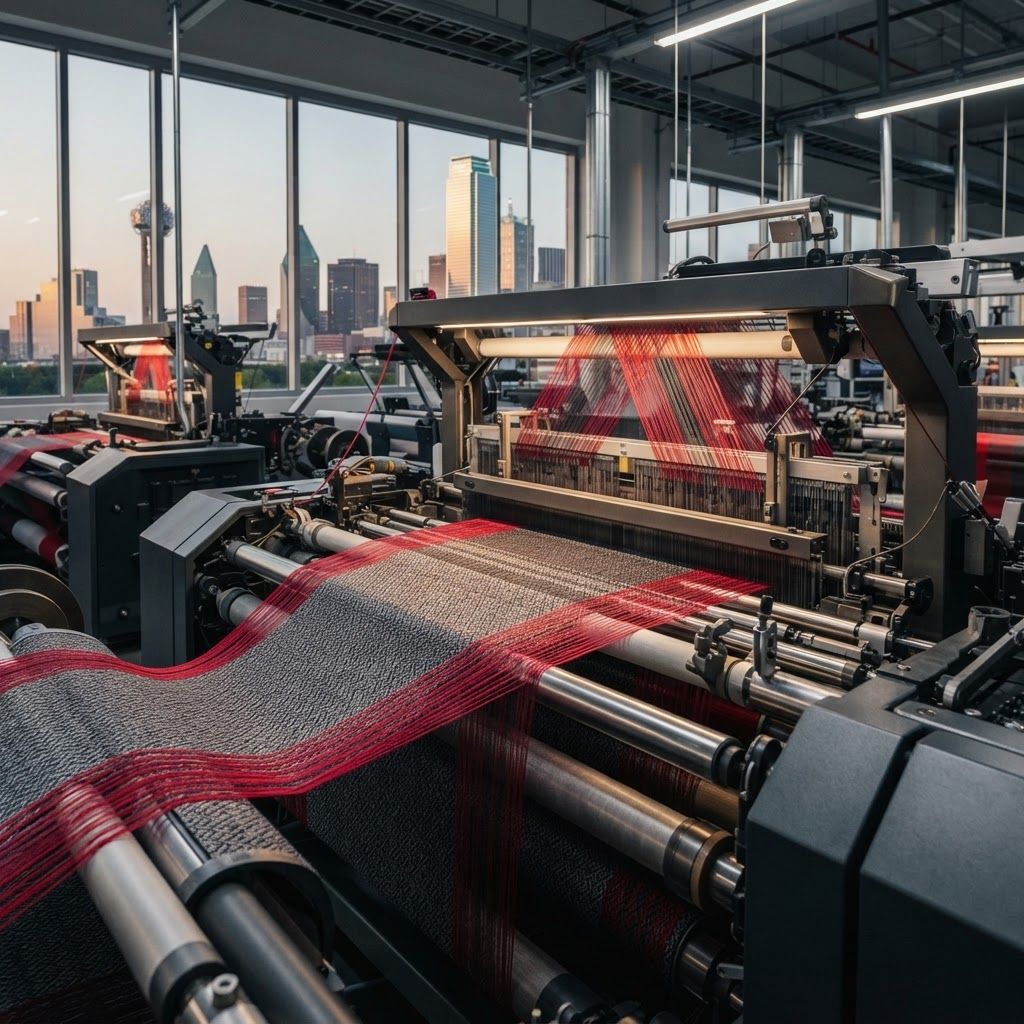
Textile Sourcing for the Dallas Market
Dallas is a major center for fashion, interiors, hospitality, transportation, trade shows, and distribution, even though many textile mills operate elsewhere in Texas or the southeastern United States. Local buyers routinely source from national manufacturers with regional sales and logistics reach. This list therefore focuses on manufacturers serving Dallas businesses rather than claiming every company operates a mill inside the city.
1. Milliken and Company
Milliken manufactures textiles and materials for commercial interiors, protective apparel, industrial uses, and other specialized markets. Its research-driven approach, broad product portfolio, and emphasis on performance make it relevant to Dallas designers, institutions, and industrial buyers. Specifications may address durability, stain resistance, flame performance, acoustics, and environmental goals.
2. Mount Vernon Mills
Mount Vernon Mills is a major U.S. textile manufacturer with capabilities in denim, workwear, flame-resistant fabrics, and other woven products. The company is relevant to apparel brands and uniform programs requiring domestic manufacturing expertise. Buyers should discuss fiber content, finishing, testing, minimum orders, and lead times early.
3. Glen Raven
Glen Raven produces performance fabrics used in awnings, marine applications, furniture, shade systems, and technical settings. Its well-known solution-dyed materials are valued for weather and fade resistance. Dallas’s heat and strong sunlight make tested outdoor performance especially important for hospitality and residential projects.
4. Standard Textile
Standard Textile manufactures and supplies textile solutions for healthcare, hospitality, and interiors. Its product and service capabilities include linens, bedding, towels, and engineered systems for institutional use. Dallas hotels and medical facilities may value lifecycle analysis, laundering performance, inventory consistency, and compliance support.
5. Culp
Culp manufactures mattress and upholstery fabrics for bedding and residential furniture markets. Its design resources and global supply capabilities support brands that need both style development and repeatable production. Dallas furniture and interiors companies should evaluate abrasion performance, color consistency, cleanability, and replenishment.
6. Beverly Knits
Beverly Knits is a U.S. circular-knitting manufacturer serving performance, apparel, industrial, bedding, and technical markets. Its domestic development capabilities can help brands move from concept and sampling toward production. Proximity within the United States may support communication, shorter replenishment cycles, and supply-chain transparency.
7. Contempora Fabrics
Contempora Fabrics specializes in knit fabric manufacturing for activewear, performance apparel, medical, and specialty uses. The company offers varied constructions and finishing possibilities. Dallas brands developing climate-appropriate apparel may prioritize breathability, stretch recovery, moisture management, softness, and wash durability.
8. Texollini
Texollini produces circular-knit fabrics for fashion, activewear, swim, intimate apparel, and technical applications. It is known for development flexibility and a broad selection of constructions. Designers should involve the mill early when color matching, stretch, weight, hand feel, and finishing must work together.
9. American and Efird
American and Efird manufactures sewing thread and technical textile products used across apparel, footwear, automotive, and industrial applications. Thread is a small component with major effects on seam strength, appearance, and production efficiency. Technical guidance can help manufacturers match thread, needle, stitch, and end use.
10. Sage Automotive Interiors
Sage Automotive Interiors develops and manufactures automotive interior materials. Its work emphasizes design, comfort, durability, color, texture, and demanding performance standards. The company is relevant to the wider North Texas transportation ecosystem, where automotive and mobility businesses require highly engineered, traceable materials.
Textile Trends Affecting Dallas Buyers
Brands are seeking greater supply-chain visibility, lower-impact fibers and processes, recycled content, and credible product-level documentation. At the same time, performance requirements continue to rise. Nearshoring and domestic production can reduce some lead-time risks, but capacity, cost, raw materials, and finishing availability still require planning. Digital sampling and smaller development runs are helping some buyers test products before committing to volume.
How to Select a Textile Manufacturer
Provide a complete specification covering construction, fiber, weight, width, color, finish, testing standards, intended use, forecast volume, and target cost. Request samples and test representative production material, not only showroom swatches. Evaluate minimum order quantities, laboratory and certification capabilities, shade control, defect policy, lead times, capacity, financial stability, and contingency plans. For Dallas applications, include heat, ultraviolet exposure, cleaning methods, abrasion, flammability, and regulatory requirements where relevant.
Editorial Selection Methodology
This guide weighs market presence, range of capabilities, professional reputation, practical relevance to Dallas customers, and evidence of sustained activity in the field. Inclusion does not mean that one provider is best for every reader, and the order should not replace project-specific research. Company services, ownership, staffing, product availability, and commercial terms can change, so readers should verify current details directly before making a commitment.
A useful comparison begins with a written statement of needs, budget, schedule, risk tolerance, and desired outcomes. Ask each candidate to explain its relevant experience, the people responsible for delivery, quality controls, communication process, pricing assumptions, and approach when conditions change. Request references or representative examples where appropriate, and compare proposals on equivalent scope rather than headline price alone. Dallas is a large, fast-changing market, so local knowledge can be valuable, but it should be considered alongside technical depth, transparency, capacity, and long-term support. Independent legal, financial, engineering, or other professional advice may also be appropriate for consequential decisions.