
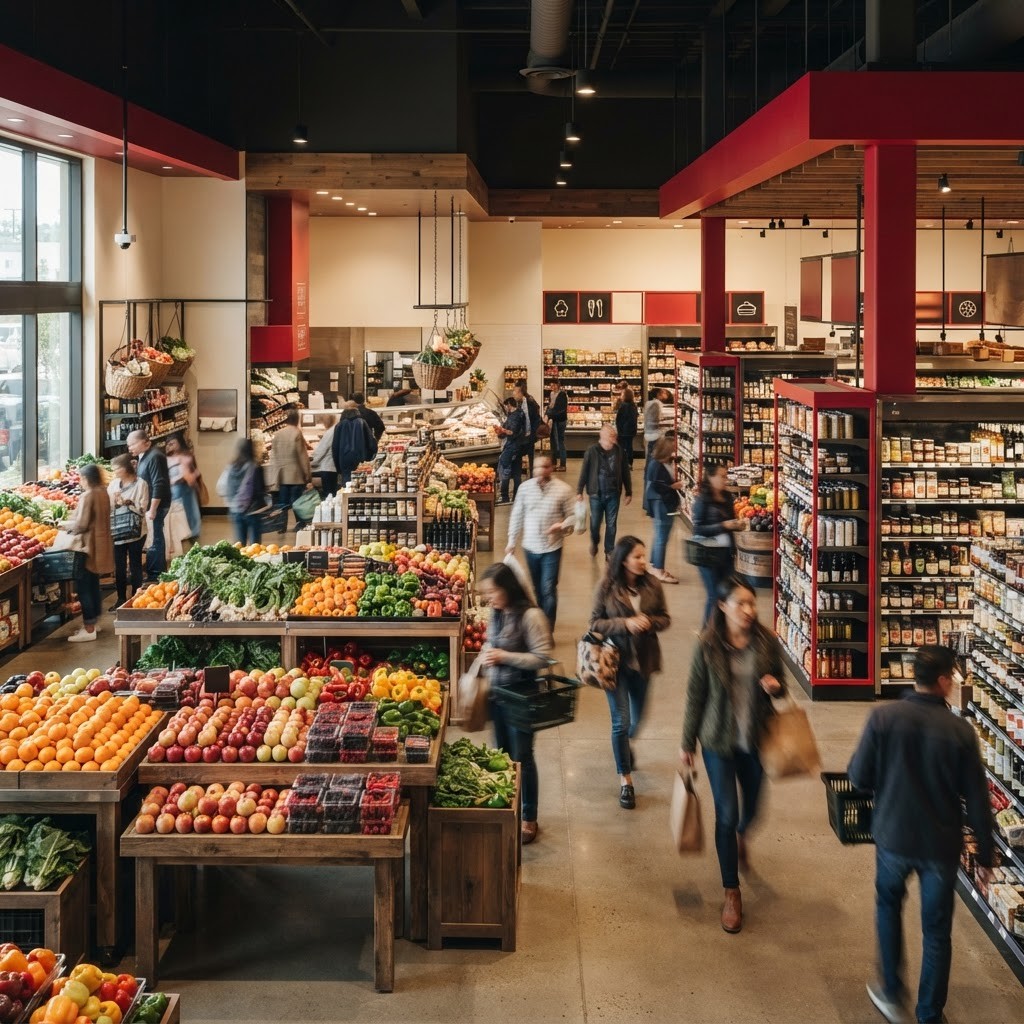
Grocery Shopping Across Los Angeles
Los Angeles is one of America’s most exciting grocery markets. A single neighborhood may support mainstream supermarkets, Korean produce halls, Mexican-focused markets, organic specialists, and warehouse clubs. The best chain depends on what is in the basket: premium produce, pantry staples, prepared meals, regional ingredients, or family-size value.
1. Trader Joe’s
Trader Joe’s is beloved for compact stores, distinctive private-label products, frozen meals, snacks, cheese, wine, and seasonal discoveries. Its edited assortment reduces decision fatigue and often delivers good value. It is less ideal when shoppers need extensive brand choice or specialized fresh ingredients. In busy Los Angeles households, convenient meal components and neighborhood locations are major advantages.
2. Whole Foods Market
Whole Foods Market is a leader in natural and organic groceries, with strong produce, prepared foods, specialty diets, cheese, seafood, and body care. Los Angeles stores often respond to local wellness preferences with plant-based and functional products. Prices vary widely by category, so sale planning and private-label options matter. Ingredient standards and specialty breadth remain key differentiators.
3. Ralphs
Ralphs is a Southern California staple offering conventional groceries, pharmacy services, household goods, prepared food, and robust loyalty pricing. Its broad stores make it practical for complete weekly shopping. Digital coupons can materially affect cost, though they require planning. Ralphs is particularly useful for households that want familiar brands and consistent neighborhood access.
4. Vons
Vons provides a traditional full-service supermarket experience with bakery, deli, meat, seafood, pharmacy, and national brands. Delivery and pickup add convenience in a traffic-heavy city. Loyalty offers can improve value, while store-level produce and prepared-food execution may vary. It is a dependable option for one-stop household shopping.
5. Sprouts Farmers Market
Sprouts combines a produce-forward layout with bulk foods, supplements, natural groceries, butcher service, and products for specific dietary needs. Promotions on fruits and vegetables can be attractive, and bulk bins let shoppers buy only the amount required. The chain bridges conventional value and wellness specialization, making it popular with health-conscious Los Angeles consumers.
6. Erewhon
Erewhon represents the premium edge of Los Angeles grocery culture. Organic produce, prepared meals, supplements, specialty beverages, and highly curated wellness products are presented in an upscale environment. Its famous smoothies and collaborations make it a cultural destination, but prices require selectivity. It is best viewed as a specialty market rather than the default source for every staple.
7. Gelson’s Markets
Gelson’s is known for attentive service, high-quality produce, premium meat and seafood, prepared food, wine, and an orderly shopping experience. The Southern California chain appeals to customers willing to pay more for curation and convenience. Smaller crowds and strong perishables can justify the premium for special meals, while price-sensitive shoppers may use it selectively.
8. Northgate Market
Northgate Market excels in Mexican and Latin American groceries, fresh tortillas, bakery items, marinated meats, produce, prepared foods, and pantry ingredients. Its stores often feel energetic and food-centered rather than generic. The chain is valuable both to families seeking familiar regional products and to cooks who want authentic ingredients. Fresh departments are central to its appeal.
9. H Mart
H Mart is a major source for Korean groceries and a broad range of Asian ingredients. Produce, seafood, thinly sliced meats, noodles, sauces, snacks, and prepared dishes support both everyday and specialized cooking. Los Angeles shoppers can discover regional products difficult to find in mainstream chains. New visitors should leave time to compare formats and understand storage needs.
10. Costco
Costco delivers value through bulk groceries, household goods, private-label products, rotisserie chicken, bakery items, and seasonal inventory. It works best for larger households, shared purchases, and products with reliable consumption. Membership, storage space, and food waste must be included in the calculation. For disciplined shoppers, quality and unit pricing can be excellent.
Building a Smarter Grocery Routine
No single supermarket wins every category. Many Los Angeles households combine a mainstream weekly shop with Trader Joe’s convenience items and visits to culturally specific markets. Compare unit prices, plan around perishability, and avoid bulk quantities that exceed storage or realistic use. Prepared food saves time but can alter both budget and sodium intake.
The city’s supermarket diversity is a practical reflection of its communities. Northgate Market and H Mart offer depth that generalized aisles cannot match, while Sprouts and Whole Foods serve wellness priorities. Erewhon turns curation into luxury, and Costco focuses on scale. The best routine uses each chain for its genuine strengths while keeping nutrition, waste, and total cost in balance.
Freshness, Safety, and Storage
Plan the route so refrigerated goods are purchased last, use insulated bags during hot Los Angeles weather, and refrigerate perishables promptly. Rotate pantry stock, freeze surplus portions, and understand date labels to reduce unnecessary waste. A well-organized kitchen makes promotions more valuable because food is visible, used safely, and less likely to be forgotten.