
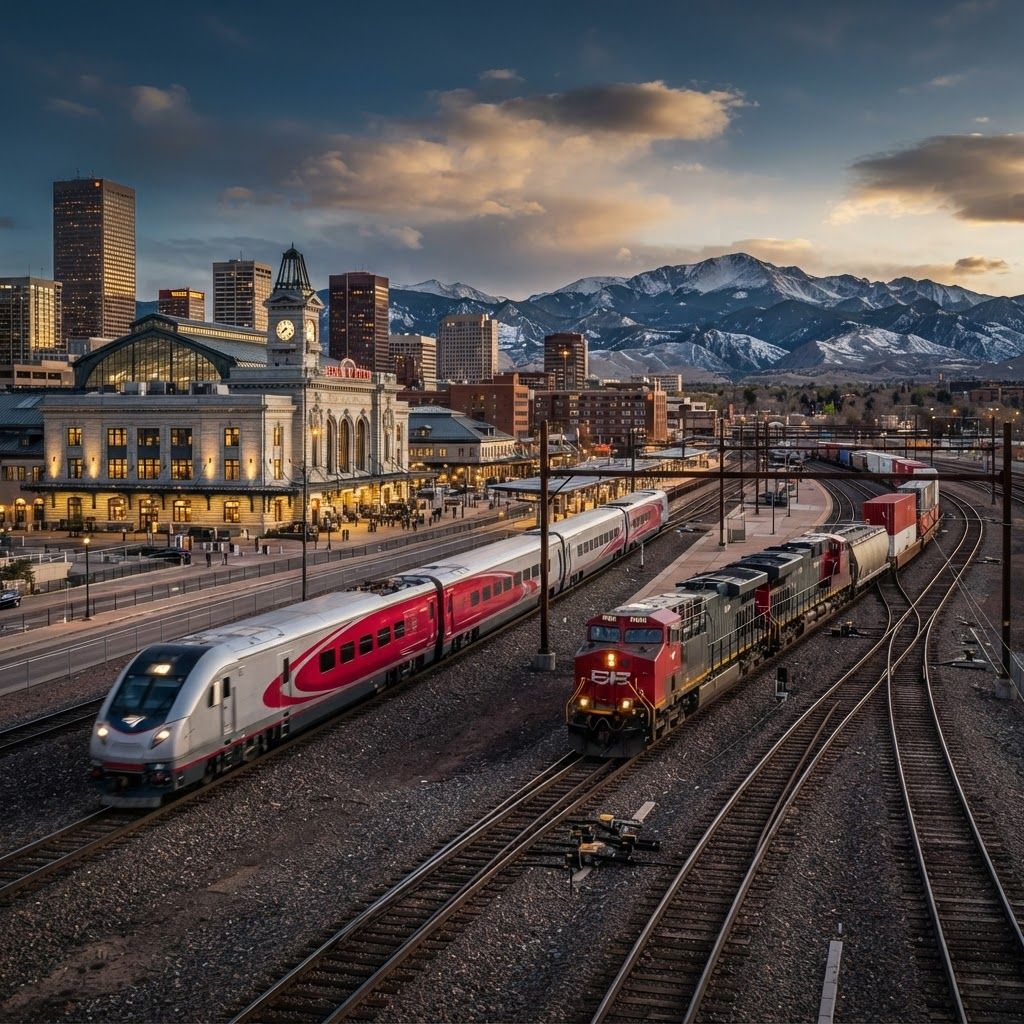
The Rich Railway Heritage of Denver
Denver's identity is deeply intertwined with the railroad, a legacy that dates back to the city's earliest days when rail connections transformed a frontier settlement into a booming regional capital. Today, that heritage lives on through a network of railway operators that continue to move both people and goods across Colorado and beyond. The city's historic Union Station, beautifully restored into a vibrant transit and social hub, stands as a symbol of this enduring relationship between Denver and the rails. From passenger services that connect commuters and long-distance travelers to freight railroads that form the arteries of regional commerce, railway operators remain a vital and dynamic part of Denver's transportation landscape.
Passenger Rail Connecting Communities
Passenger rail service in the Denver area serves both daily commuters and travelers seeking scenic long-distance journeys. The Regional Transportation District operates commuter rail lines that link downtown Denver with surrounding suburbs and the airport, offering a fast and reliable alternative to driving through congested corridors. On the national level, Amtrak provides service through Denver, with routes that traverse some of the most spectacular mountain scenery in the country, drawing rail enthusiasts and leisure travelers alike. These passenger services combine practicality with the timeless appeal of train travel, giving residents and visitors convenient access to destinations while showcasing Colorado's breathtaking landscapes along the way.
Freight Railroads Powering Commerce
Freight rail is the workhorse of Denver's railway network, carrying enormous volumes of cargo that support industries throughout the region and the nation. Major railroads such as Union Pacific and BNSF Railway operate extensive networks through the Denver area, transporting everything from agricultural products and coal to consumer goods and industrial materials. These operators move freight with remarkable efficiency, offering an environmentally friendly alternative to long-haul trucking for many types of cargo. The strategic rail corridors passing through Denver connect the city to ports, manufacturing centers, and markets across the continent, reinforcing its role as a critical node in the national supply chain and a driver of economic activity.
Scenic and Heritage Rail Experiences
Beyond practical transportation, Colorado's railway tradition has given rise to scenic and heritage rail experiences that attract tourists from around the world. While some of the most famous heritage lines operate in the mountains beyond the metro area, they remain closely associated with Denver as a gateway and are easily accessible to visitors basing themselves in the city. These historic trains, often powered by vintage steam or diesel locomotives, carry passengers through dramatic canyons and over high mountain passes, offering an unforgettable window into both the natural beauty of the state and the golden age of rail travel. Such experiences celebrate Colorado's railroad legacy and contribute meaningfully to the region's tourism economy.
The Future of Rail in Denver
As Denver continues to grow and prioritize sustainable transportation, the importance of its railway operators is likely to increase in the years ahead. Investments in commuter rail expansion, improvements to passenger service, and the ongoing modernization of freight operations all point to a future in which rail plays an even greater role in regional mobility and commerce. The combination of efficiency, environmental benefits, and the ability to move large volumes of people and goods positions rail as a key component of Denver's transportation strategy. Building on a proud history and looking toward an innovative future, the railway operators serving Denver remain essential to keeping the Mile High City connected and prosperous.
Practical Tips for Comparing Denver Options
Before making a final choice, readers should define their priorities and compare providers on more than price alone. Availability can change quickly in Denver during summer holidays, major conventions, sporting events, and the winter mountain season, so planning ahead is valuable. A low advertised rate may not include every fee, optional upgrade, or seasonal surcharge. Asking for a clear summary of what is included helps prevent surprises and makes side-by-side comparisons more meaningful. Customers should also consider cancellation terms, operating hours, accessibility needs, and how easily the provider can respond when plans change.
Recent customer feedback can reveal useful patterns, particularly when several reviewers mention the same strength or concern. However, a single review rarely tells the whole story. Look instead for consistent comments about professionalism, cleanliness, communication, punctuality, condition of facilities or equipment, and the way problems are resolved. Established names can offer broad resources and standardized processes, while smaller Denver businesses may provide more flexible, personal service and deeper neighborhood knowledge. Neither model is automatically better; the right fit depends on the complexity of the trip or project and the level of support required.
Denver's altitude, fast-changing weather, busy airport, and proximity to mountain corridors can all affect scheduling. Visitors arriving from lower elevations may benefit from building extra time into their first day, while anyone traveling west should account for traffic and winter road conditions. Confirming arrangements shortly before arrival is a simple precaution. It is also sensible to keep essential documents and reservation details readily available. By combining careful research with realistic expectations, readers can choose confidently and get more value from the city's strongest options. The best provider is ultimately the one that delivers dependable service, communicates clearly, and aligns closely with the customer's individual priorities.