
The Role of Public Transit in Tunisia
Public transit is the lifeblood of urban and regional mobility in Tunisia, carrying millions of residents, students, workers, and visitors to their destinations every day. From the bustling streets of Tunis to coastal cities and inland towns, an interconnected network of buses, light rail, metros, and regional trains provides affordable and accessible transportation. For a country where a large share of the population relies on shared transport, the quality and reach of these services have a direct impact on daily life, economic productivity, and quality of living.
Tunisia's public transit system blends long-established national operators with regional networks, offering a mix of modes that serve diverse needs. As cities grow and urban congestion increases, investment in efficient, sustainable public transport has become a national priority.
What Makes Public Transit Services Excellent
The best public transit services are defined by reliability, affordability, coverage, and comfort. Frequent and punctual schedules allow passengers to plan their journeys with confidence, while extensive route networks ensure that neighbourhoods, workplaces, schools, and commercial centres are well connected. Affordable fares keep transport accessible to all segments of society.
Modern, well-maintained vehicles improve comfort and safety, and clear information systems, including timetables, route maps, and increasingly digital tools, help passengers navigate the network. Accessibility for elderly passengers and people with disabilities is an important measure of an inclusive transit system.
Leading Public Transit Services in Tunisia
Transtu (the Société des Transports de Tunis) is the central pillar of public transport in the capital region, operating an extensive network of buses and the iconic light rail system known as the Métro léger de Tunis. The TGM line, connecting Tunis to the coastal suburbs of La Goulette, Carthage, Sidi Bou Said, and La Marsa, is a beloved and historic part of the city's transit fabric.
The national railway operator, SNCFT (Société Nationale des Chemins de Fer Tunisiens), provides intercity and regional rail services linking major cities such as Tunis, Sousse, Sfax, and Gabes, as well as suburban lines that ease daily commuting. Its trains offer an efficient alternative for medium and long-distance travel across the country.
Regional transport companies, often organised by governorate, operate bus networks that connect smaller towns and rural areas to urban centres, ensuring nationwide coverage. The popular Sahel Metro serving the Sousse-Monastir-Mahdia coastal corridor is another notable service, supporting both residents and the region's vibrant tourism industry. Shared taxis and louages, while semi-formal, also play a vital complementary role in connecting communities throughout Tunisia.
Modes of Public Transport
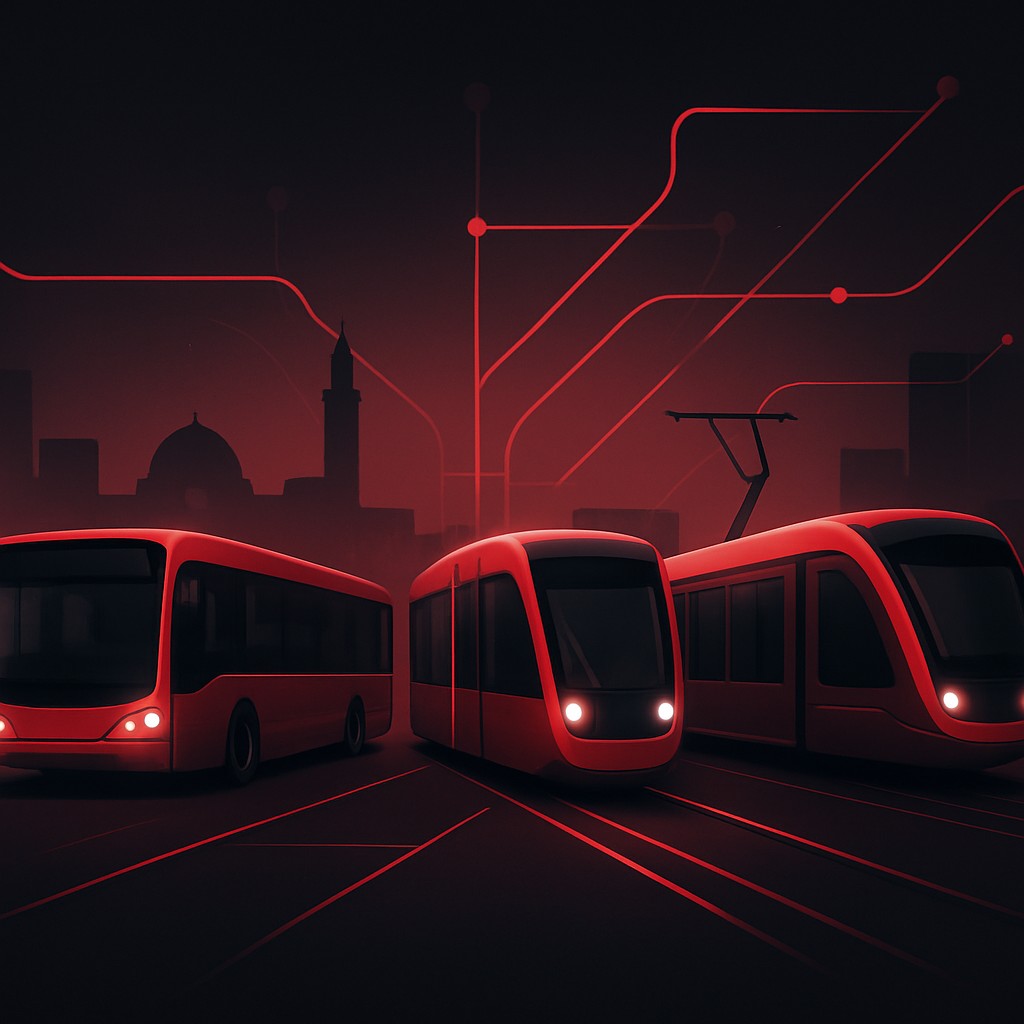
Tunisia's public transit ecosystem encompasses several modes. City buses form the backbone of urban transport, offering broad coverage and frequent service. Light rail and metro lines provide faster, higher-capacity travel along key corridors in Tunis and the Sahel region. Regional and intercity trains connect distant cities efficiently and comfortably.
Complementing these formal networks are louages, the shared intercity minibuses that offer flexible, frequent connections between towns, and shared taxis that fill gaps in local coverage. Together, these modes create a layered system capable of serving a wide range of travel needs across the country.
Trends Shaping Urban Mobility
Public transit in Tunisia is undergoing meaningful transformation. Efforts to modernise fleets, expand light rail and metro networks, and integrate fare systems aim to improve efficiency and the passenger experience. Sustainability is a growing focus, with interest in cleaner vehicles and reduced emissions to address urban air quality and climate goals.
Digital innovation is gradually entering the sector through electronic ticketing, real-time tracking, and journey-planning tools that make transit more convenient. Urban planning initiatives increasingly prioritise public transport to combat congestion, reduce reliance on private cars, and support more liveable, connected cities.
Tips for Using Public Transit in Tunisia
For residents and visitors alike, a few practical tips can enhance the public transit experience. Familiarising oneself with route maps and schedules helps in planning efficient journeys. Travelling outside peak hours when possible can mean a more comfortable trip. Carrying small change is useful for fares, and keeping an eye on belongings in crowded vehicles is always wise.
For intercity travel, trains and louages each offer advantages depending on speed, comfort, and destination. Exploring the scenic TGM line is a memorable way for visitors to experience the coastal suburbs of Tunis while using everyday public transport.
Conclusion
Public transit services are essential to keeping Tunisia moving, connecting people to opportunities, services, and one another every day. From the metros and buses of Tunis to the national rail network and regional connections, the country's transit systems offer affordable and far-reaching mobility. As Tunisia continues to invest in modernisation and sustainability, its public transport services are poised to become even more efficient, comfortable, and central to urban and regional life.