
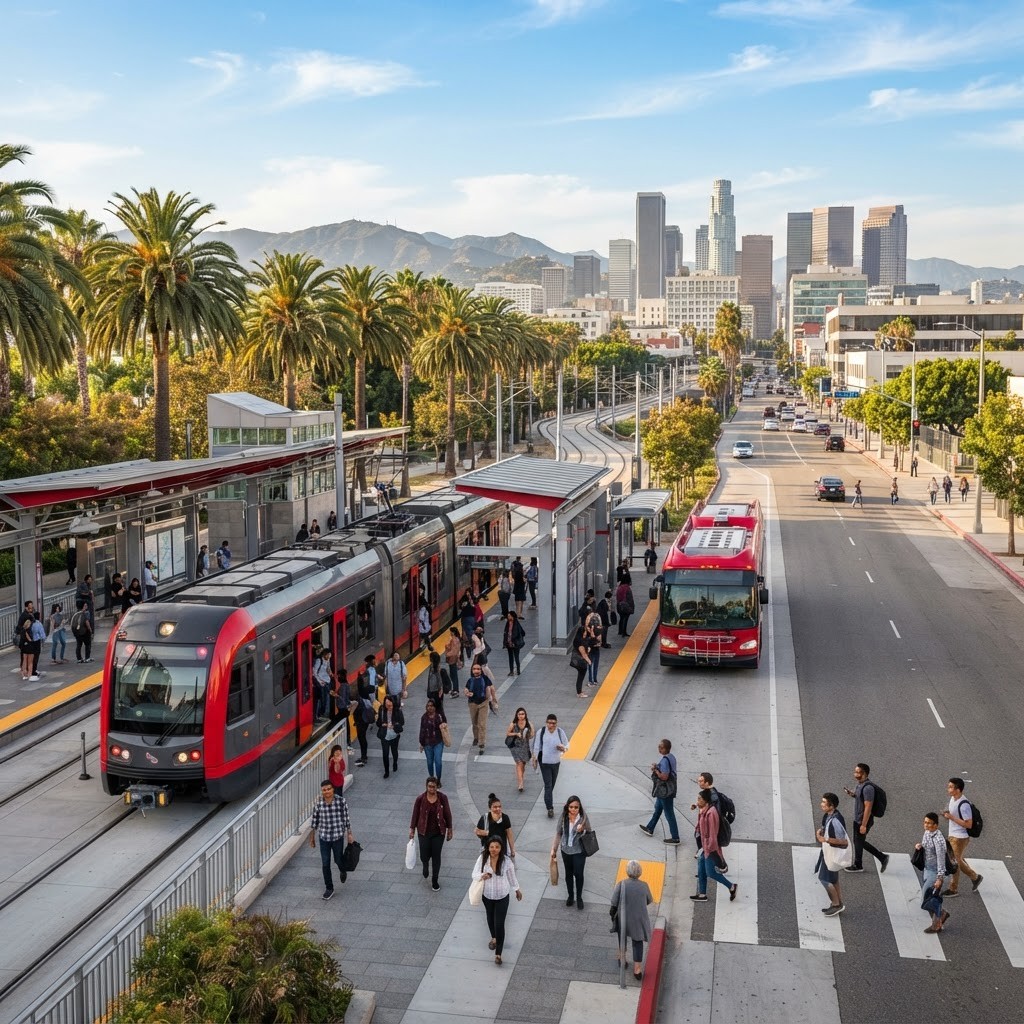
Using Public Transportation in Los Angeles
Los Angeles is geographically vast, and no single transit provider covers every community equally. The most effective car-free trips often combine regional rail with local buses or use neighboring municipal systems. Service frequency, operating hours, fare media, and transfer rules vary, so planning matters. These ten agencies and services form some of the most useful parts of the region’s public transportation network.
1. LA Metro
LA Metro is the backbone of public transportation in Los Angeles County, operating subway, light rail, local buses, and rapid bus lines. Its network reaches Downtown, Hollywood, Santa Monica, Long Beach, Pasadena, and many other districts. Integrated fares and frequent trunk routes make it the first choice for many riders. Continued rail expansion is improving regional access, though late-night frequency and first-mile connections can still require planning.
2. Metrolink
Metrolink provides regional commuter rail across six Southern California counties, with Los Angeles Union Station as its central hub. It is particularly valuable for longer trips from the Antelope Valley, San Bernardino, Riverside, Orange, and Ventura areas. Trains offer a more comfortable alternative to freeway driving and accommodate bicycles on many services. Weekend and off-peak frequencies vary by line, so riders should organize return travel in advance.
3. LADOT Transit
The Los Angeles Department of Transportation operates DASH neighborhood circulators and Commuter Express routes. DASH buses provide convenient short trips in areas such as Downtown and many residential districts, while Commuter Express links outlying neighborhoods with major employment centers. These services complement rather than duplicate Metro. Low fares and targeted routing are strengths, but schedules and operating days differ significantly among routes.
4. Santa Monica Big Blue Bus
Big Blue Bus serves Santa Monica and surrounding Westside destinations, including connections toward UCLA, Venice, and Metro rail stations. The agency is known for useful local coverage in a dense coastal area where parking is expensive. Riders can combine it with the Metro E Line for broader access. Frequent routes are practical for residents, students, workers, and visitors exploring the Westside without a car.
5. Long Beach Transit
Long Beach Transit operates local and regional bus routes throughout Long Beach and nearby communities. Connections with the Metro A Line and waterfront destinations make it useful for commuters and visitors. The agency also has a history of water-based transit services in the harbor area when operating. Local route knowledge, neighborhood coverage, and links to major transfer points make it an essential part of southeastern Los Angeles County mobility.
6. Culver CityBus
Culver CityBus serves Culver City and portions of West Los Angeles with routes connecting employment centers, neighborhoods, schools, and rail stations. Its buses are particularly useful around the rapidly developing Culver City business district. Coordination with Metro enables longer trips across the county. The compact agency’s focused service area can offer direct connections that are not as convenient on the larger regional network.
7. Foothill Transit
Foothill Transit serves the San Gabriel and Pomona valleys, operating local and express routes across eastern Los Angeles County. It connects communities to Downtown Los Angeles, major colleges, employment centers, and rail stations. Express buses can be a practical commuting alternative on long freeway corridors. The agency is also recognized for adopting lower-emission and electric-bus technology, reflecting the region’s broader shift toward cleaner transit.
8. Torrance Transit
Torrance Transit provides bus service in the South Bay and links Torrance with neighboring communities, regional rail, and employment destinations. It fills important gaps in an area where destinations are spread out and Metro rail coverage is limited. Riders benefit from connections to other municipal operators, but cross-agency trips should be planned carefully. Service is especially relevant to workers and residents traveling within the South Bay.
9. GTrans
GTrans, operated by the City of Gardena, serves communities in the South Bay and connects with major regional transit corridors. Its local routes support access to employment, education, shopping, and transfer points. The agency’s focused geography makes it an important feeder to larger systems. For riders whose trip begins away from rail, GTrans can provide the crucial first segment of a longer journey.
10. BurbankBus
BurbankBus provides local transportation within Burbank and connections to employment areas, Metrolink stations, and regional services. It is useful for trips involving the city’s major media and aviation districts. Routes are designed largely around local circulation and commuter needs, so operating hours may be narrower than all-day urban networks. When schedules align, the service reduces the last-mile challenge between regional rail and workplaces.
Tips for Better Transit Trips
Use real-time arrival information where available, but allow extra time for important appointments. Check the final departure before beginning an evening trip and confirm whether transfers require additional fare. A reloadable regional fare card works across many agencies, although policies differ. At Union Station and other large hubs, leave enough time to move between platforms. Bring water during hot weather, use well-lit stops after dark, and remain aware of surroundings. For regular commutes, test alternative routes for disruption days. Los Angeles transit is most useful when riders treat the network as a collection of connected services rather than expecting one agency to provide every trip.