
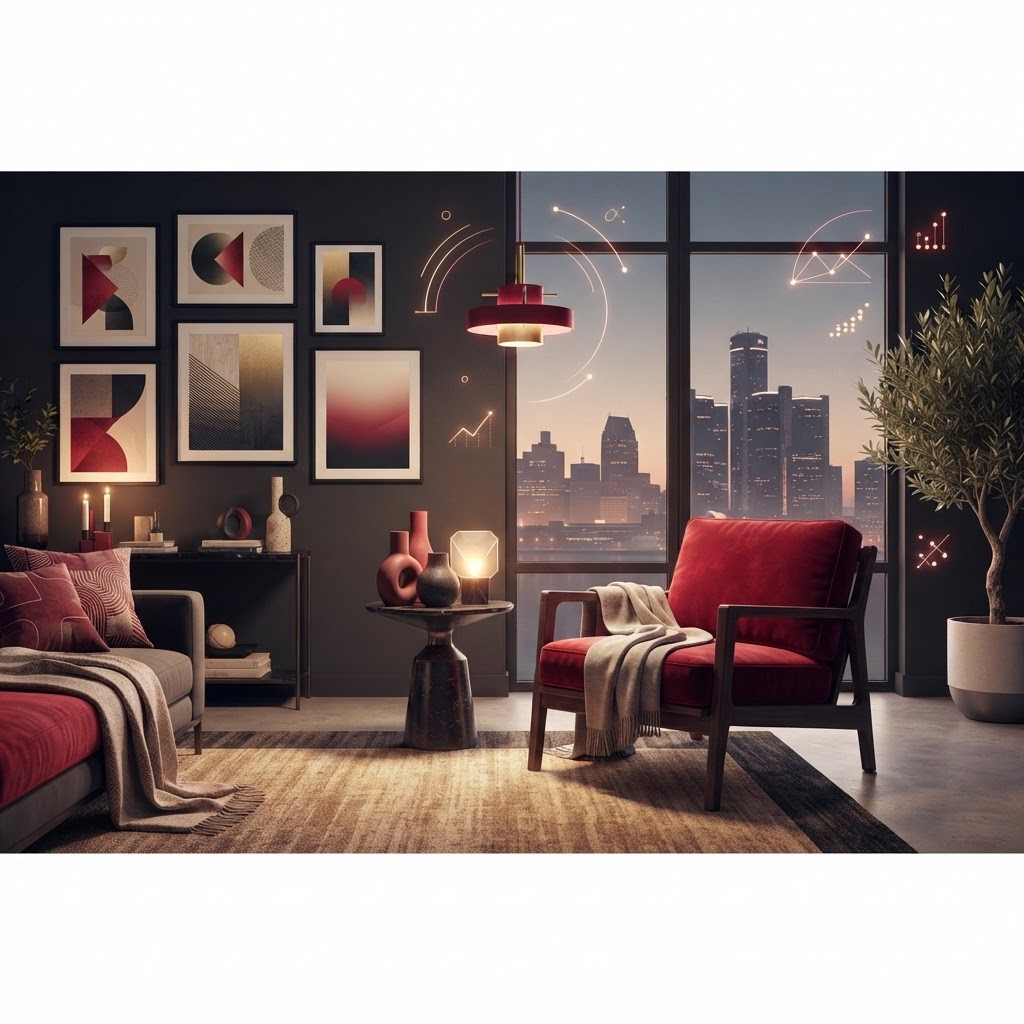
Detroit's Distinctive Design Identity
Few American cities have a home design culture as clearly rooted in their own history as Detroit. The region's manufacturing legacy left behind a deep bench of material knowledge, metalworking capability, woodshops, and upholstery expertise. Metro Detroit was also the birthplace of American modernism in furniture, with the Cranbrook Academy of Art in Bloomfield Hills shaping generations of designers whose influence on mid-century form is still visible in showrooms worldwide.
That heritage shows up in what local brands make today: honest materials, visible joinery, blackened steel and brass, reclaimed hardwood, leather that ages rather than wears out, and textiles woven in small runs. Detroit interiors tend to favor durability and character over disposability, a sensibility that pairs naturally with the city's loft conversions, brick bungalows, and restored Tudor and Colonial homes.
The Top 10 Home Decor Brands in Detroit
1. Herman Miller
Founded in Michigan and central to the story of modern furniture, Herman Miller remains a global benchmark for design integrity and ergonomic engineering. Its archive includes some of the most recognized seating and storage designs of the twentieth century, and current collections continue to emphasize longevity, repairability, and material responsibility. For Detroit-area homeowners, the brand represents both regional pride and enduring quality.
2. Floyd
Founded in Detroit, Floyd built its reputation on furniture designed to move with you rather than be discarded. Its modular bed frames, sofas, and shelving assemble without tools, ship flat, and use durable plywood, powder-coated steel, and replaceable components. The brand's clean, unfussy aesthetic and repair-friendly philosophy have made it a favorite among younger homeowners and renters.
3. Shinola
Best known for watches and leather goods produced in Detroit, Shinola extends its craft sensibility into home goods including leather accessories, journals, audio pieces, and thoughtfully designed objects. The brand's signature blend of industrial heritage and refined finishing translates well into styled shelves, desks, and entryways.
4. Woodward Throwbacks
One of the most distinctly Detroit brands in the market, Woodward Throwbacks builds furniture and decor from salvaged materials reclaimed from local buildings. Reclaimed wood tables, shelving, signage-inspired art, and custom pieces carry visible history, and the operation has become a symbol of creative reuse within the city's design community.
5. Scott Shuptrine Interiors
A long-established metro Detroit home furnishings retailer, Scott Shuptrine Interiors offers curated furniture collections alongside in-house design services. Clients value access to complimentary design consultation, coordinated room planning, and quality upholstery lines suited to family use.
6. Gorman's Home Furnishings and Interior Design
Gorman's is a respected regional destination for contemporary and transitional furniture, with a strong reputation for customer service and design guidance. The showrooms present complete room compositions, which helps homeowners understand scale, proportion, and material pairing before committing.
7. Nest Detroit
A beloved local shop, Nest curates home goods, textiles, ceramics, candles, and gifts with a strong emphasis on independent makers. It is the kind of store where finishing touches come from, and it has played a meaningful role in supporting Michigan artisans and small design studios.
8. Detroit Wallpaper Company
Specializing in original wallpaper and mural designs produced locally, Detroit Wallpaper Company offers patterns ranging from geometric modern to botanical and abstract. As feature walls and pattern-forward interiors have returned to prominence, the brand has become a go-to for adding architectural interest to plain rooms.
9. Smith Shop
Smith Shop is a Detroit metalworking studio producing hand-forged and fabricated pieces including lighting, hardware, railings, tables, and sculptural objects. Its work bridges craft and architecture, and it is frequently commissioned for custom elements that anchor a room.
10. Rugs and Decor of Michigan
Focusing on floor coverings and finishing textiles, this regional retailer offers wool, natural fiber, vintage-style, and contemporary rugs alongside pillows and throws. Because rugs define zones and set color direction in open-plan spaces, a specialist source is genuinely useful when assembling a room.
Interior Trends Shaping Detroit Homes
Warm minimalism continues to dominate, replacing cool gray palettes with plaster tones, camel, terracotta, olive, and deep clay. Natural materials are central: white oak, walnut, travertine, unlacquered brass, linen, and wool. Texture carries the visual interest that bold color once provided, through boucle upholstery, ribbed wood, hand-glazed tile, and woven wall hangings.
Industrial heritage remains a strong local thread, but it has softened. Exposed brick and steel are now paired with plush textiles and warm lighting rather than more hard surfaces. Layered lighting has also become a defining feature of well-designed Detroit interiors, combining ambient fixtures, task lamps, and accent lighting on dimmers to counter the region's short winter daylight hours.
How to Judge Quality When Buying Furniture
For upholstery, look for kiln-dried hardwood frames, eight-way hand-tied or high-quality sinuous spring suspension, and high-resilience foam wrapped in down or fiber. Check that patterns align at seams and that cushions have zippered, reversible covers. For case goods, prefer solid wood or high-grade plywood over particleboard, and inspect drawer construction for dovetail joinery and smooth full-extension glides.
Rugs should be evaluated by fiber and construction. Hand-knotted wool lasts decades and improves with age, while low-cost machine-made synthetics flatten quickly in traffic areas. For lighting, examine socket quality, wiring gauge, and whether the fixture is rated for the location you intend to use it.
Building a Cohesive Look
Start with a restrained palette of three to five colors and repeat them deliberately across rooms. Choose one dominant material family, such as warm oak and brass, and let it recur in furniture, hardware, and accessories. Vary scale intentionally so a room contains a mix of large anchoring pieces and smaller punctuation. Finally, invest most heavily in the items you touch daily, including seating, mattresses, and dining chairs, and economize on decorative accents that are easy to change as taste evolves.
Supporting Local Makers
One of the advantages of decorating in Detroit is access to the makers themselves. Many local studios accept commissions, allowing custom dimensions, finishes, and materials at prices competitive with mid-tier retail imports. Custom work also solves the practical problems of older homes, where odd wall lengths, deep window wells, and non-standard ceiling heights make off-the-shelf furniture awkward.
Final Thoughts
Detroit's home decor landscape spans globally significant design institutions, direct-to-consumer innovators, salvage-driven craft studios, and full-service furnishings retailers. Together they make it possible to furnish a home with pieces that carry real material quality and a genuine sense of place. Buy fewer things, buy better ones, prioritize local craft where it makes sense, and let the character of your home guide the palette rather than fighting it.