
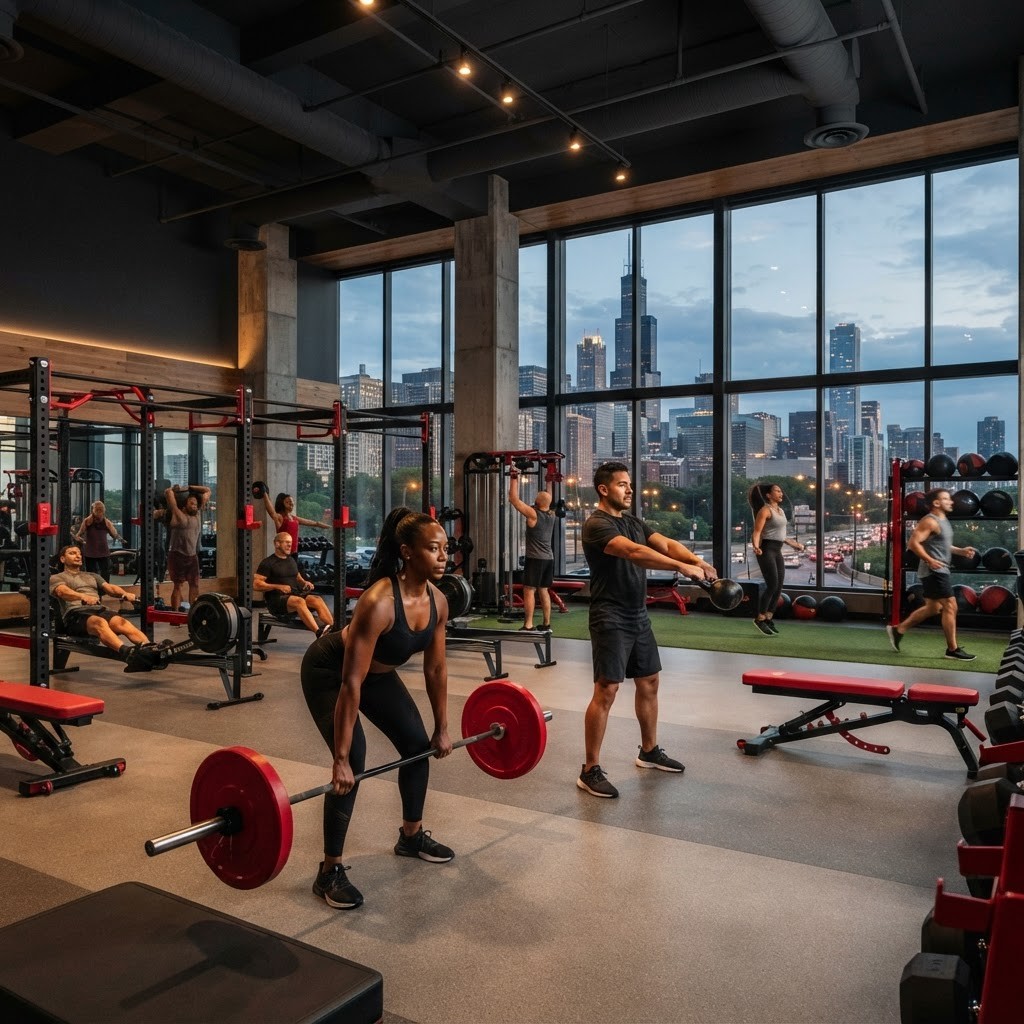
Finding a Gym You Will Actually Use
The best fitness center is not necessarily the largest or most expensive. It is the one whose location, hours, equipment, coaching, and atmosphere support consistent training. Chicago residents should factor in commuting patterns and winter travel. Visit at the time you expect to exercise, inspect cleanliness and equipment availability, review cancellation terms, and ask whether classes or specialty areas require additional fees.
1. East Bank Club
East Bank Club is one of Chicago’s best-known full-service athletic clubs. Its expansive River North campus includes strength and cardio areas, pools, courts, group classes, personal training, and substantial wellness amenities. It suits members who want many activities under one roof and will use premium facilities regularly. The scale can justify the investment for active households, but prospective members should assess which amenities truly matter.
2. Midtown Athletic Club
Midtown Athletic Club blends fitness, racquet sports, aquatics, training, and hospitality-style amenities in Bucktown. Tennis and pickleball resources are major differentiators, while studios and family programming broaden its appeal. The club model works well for people seeking a social and recreational environment rather than a simple workout floor.
3. Chicago Athletic Clubs
Chicago Athletic Clubs operates neighborhood gyms including Lakeview, Lincoln Square, West Loop, Wicker Park, and other locations. Facilities vary, but the network is known for group fitness, strength equipment, pools at selected clubs, and a distinctly local identity. Members who move around the North Side or central neighborhoods may value multi-club access.
4. Lakeshore Sport & Fitness
Lakeshore Sport & Fitness offers large facilities with extensive classes, aquatics, racquet sports, training, and family activities. Its Lincoln Park and Illinois Center locations serve different commuting patterns. The breadth is useful for families and people who prefer variety. Comparing peak-time crowding, childcare availability, and location-specific amenities is essential.
5. Fitness Formula Clubs
Fitness Formula Clubs has multiple Chicago locations and combines gym floors, classes, personal training, pools at selected sites, and corporate wellness access. The network can be convenient for downtown professionals who want to train near work and in residential neighborhoods. Each club has its own layout and features, so a tour should focus on the location you will use most.
6. Equinox
Equinox positions its Chicago clubs as premium fitness destinations, with polished strength and cardio spaces, branded classes, personal training, and upscale locker rooms. It may fit professionals who value design, service, and structured classes. The higher cost makes attendance habits and commute convenience especially important when judging value.
7. Life Time
Life Time provides large athletic-country-club facilities in the Chicago area, often with pools, studios, strength zones, recovery amenities, and family programming. It is strongest for members who use multiple services and can reach a location conveniently. Offerings vary significantly by club, and some programs may carry added costs.
8. Planet Fitness
Planet Fitness offers a budget-oriented model with cardio machines, selectorized strength equipment, and broad operating hours at many locations. It can work well for beginners, travelers, and members whose routines rely on straightforward equipment. Serious powerlifters or athletes needing specialty platforms should inspect the specific club before enrolling.
9. LA Fitness
LA Fitness clubs in the Chicago region commonly offer broad equipment selections, group classes, courts, and pools at certain locations. Its mid-market model can provide useful variety without boutique pricing. Conditions and amenities differ by branch, making an in-person peak-hour visit more informative than a general brand impression.
10. Quads Gym
Quads Gym is a respected Chicago institution with a strong bodybuilding and strength-training identity. Its extensive equipment and serious training culture appeal to lifters who value substance over spa amenities. Beginners can also thrive in such an environment when they have a sensible program and feel comfortable asking for guidance on unfamiliar equipment.
How to Compare Memberships
Read the agreement for initiation fees, annual charges, cancellation notice, freezes, and guest policies. Ask whether classes, towels, lockers, parking, childcare, and recovery services are included. Evaluate safety and accessibility, including staff presence and equipment maintenance. If personal training matters, verify credentials and ask how programming, progression, and outcomes are documented rather than choosing solely on salesmanship.
Chicago Fitness Trends
Strength training, pickleball, functional conditioning, recovery services, and hybrid digital coaching continue to grow. Members increasingly want community and measurable progress, not simply rows of machines. Chicago also offers lakefront running, parks, and seasonal recreation, so a center can complement outdoor activity rather than replace it. Choose a gym that removes friction, supports progressive training, and makes you want to return on an ordinary cold Tuesday.