
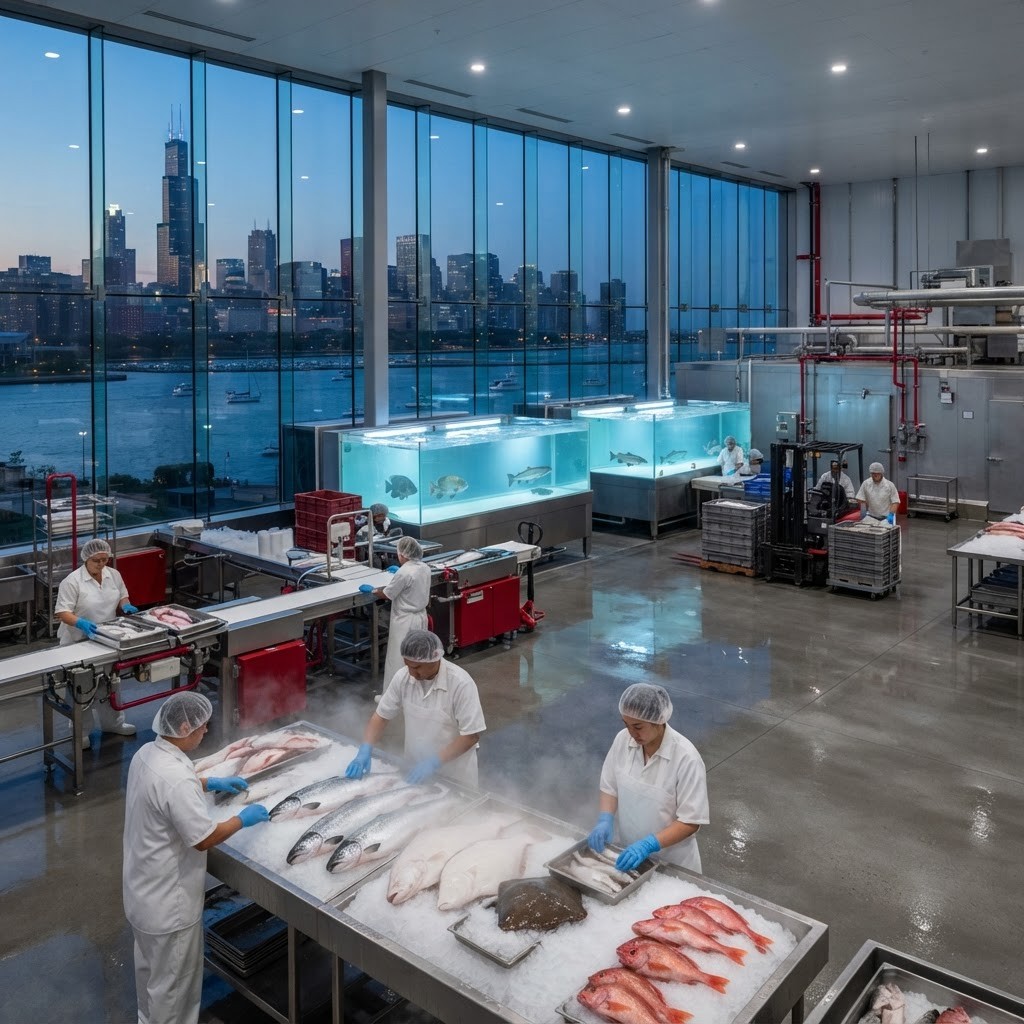
How Chicago’s Seafood Market Works
Chicago is far from the ocean, but its air cargo, rail, trucking, restaurant industry, and Great Lakes location support a substantial seafood trade. The city’s leading fishery-related companies receive fresh and frozen products from domestic and international sources, process portions to customer specifications, and maintain strict temperature control through final delivery.
Professional buyers should evaluate species identification, harvest method, origin, sustainability documentation, cold-chain records, cut yield, delivery schedules, and recall readiness. Freshness is not simply a label; it depends on time, temperature, handling, and honest product information.
1. Fortune Fish & Gourmet
Fortune Fish & Gourmet is a major Chicago-area seafood and specialty-food distributor. Its broad selection, processing capabilities, chef relationships, and distribution reach make it a leading source for restaurants, hotels, retailers, and institutions across the Midwest.
2. Supreme Lobster & Seafood Company
Supreme Lobster & Seafood is a well-established regional distributor supplying fresh and frozen fish, shellfish, lobster, and specialty products. Consistent delivery and category depth are important advantages for restaurants that change menus seasonally or need dependable core items.
3. Wabash Seafood Company
Wabash Seafood has long served Chicago’s hospitality and foodservice sector. Its market knowledge and access to varied species help chefs source products suited to daily specials, high-volume service, and different price points.
4. Boston Fish Market
Boston Fish Market combines wholesale expertise with retail and restaurant operations in the Chicago area. Its high-volume model and visible seafood displays have made it a familiar regional name. Buyers should discuss exact pack, preparation, and delivery needs.
5. The Fishguy Market
The Fishguy Market is known for carefully sourced seafood and close relationships with culinary customers. Specialty suppliers can add value through direct product knowledge, seasonal recommendations, and preparation guidance rather than simply presenting a long commodity list.
6. Dirk’s Fish & Gourmet Shop
Dirk’s is a respected Chicago seafood shop emphasizing quality, education, and diverse species. Its approach offers lessons for retailers: knowledgeable staff and transparent handling can encourage customers to try unfamiliar fish and prepare it successfully.
7. Hagen’s Fish Market
Hagen’s Fish Market is a longstanding Northwest Side business known for smoked fish, fresh seafood, and house preparation. Traditional smoking and neighborhood loyalty differentiate it from large distributors and demonstrate the lasting value of specialized craftsmanship.
8. Calumet Fisheries
Calumet Fisheries is an iconic South Side smokehouse associated with Chicago’s industrial waterfront. Its smoked fish and seafood reflect a regional culinary tradition. Although it is not a conventional broadline wholesaler, it is an important fish-focused company in the city.
9. Metropolitan Farms
Metropolitan Farms has pursued aquaponic production in Chicago, combining fish and plant cultivation in recirculating systems. Urban aquaculture can shorten supply chains and create educational value, though energy use, water chemistry, animal welfare, and economics require disciplined management.
10. Wild Fork
Wild Fork serves Chicago consumers with a large frozen assortment that includes seafood. Advanced freezing can preserve quality and reduce waste when products remain consistently cold. The model reflects growing acceptance of high-quality frozen fish for convenient inventory management.
Buying Seafood Responsibly
Ask suppliers for the scientific or precisely recognized market name, harvest area, production method, and relevant certifications. Sustainability claims should be specific and verifiable. Farmed and wild products can both be responsible choices depending on species, location, feed, habitat effects, and fishery management.
Receiving teams should check package integrity, temperatures, odor, texture, shellfish tags, and use-by guidance. Keep raw seafood separated from ready-to-eat foods and train staff in allergen controls. Chicago buyers also need contingency plans for flight delays and severe weather. The best supplier communicates substitutions before delivery, provides complete traceability, processes seafood consistently, and helps customers use seasonal species that balance quality, value, and responsible sourcing.