
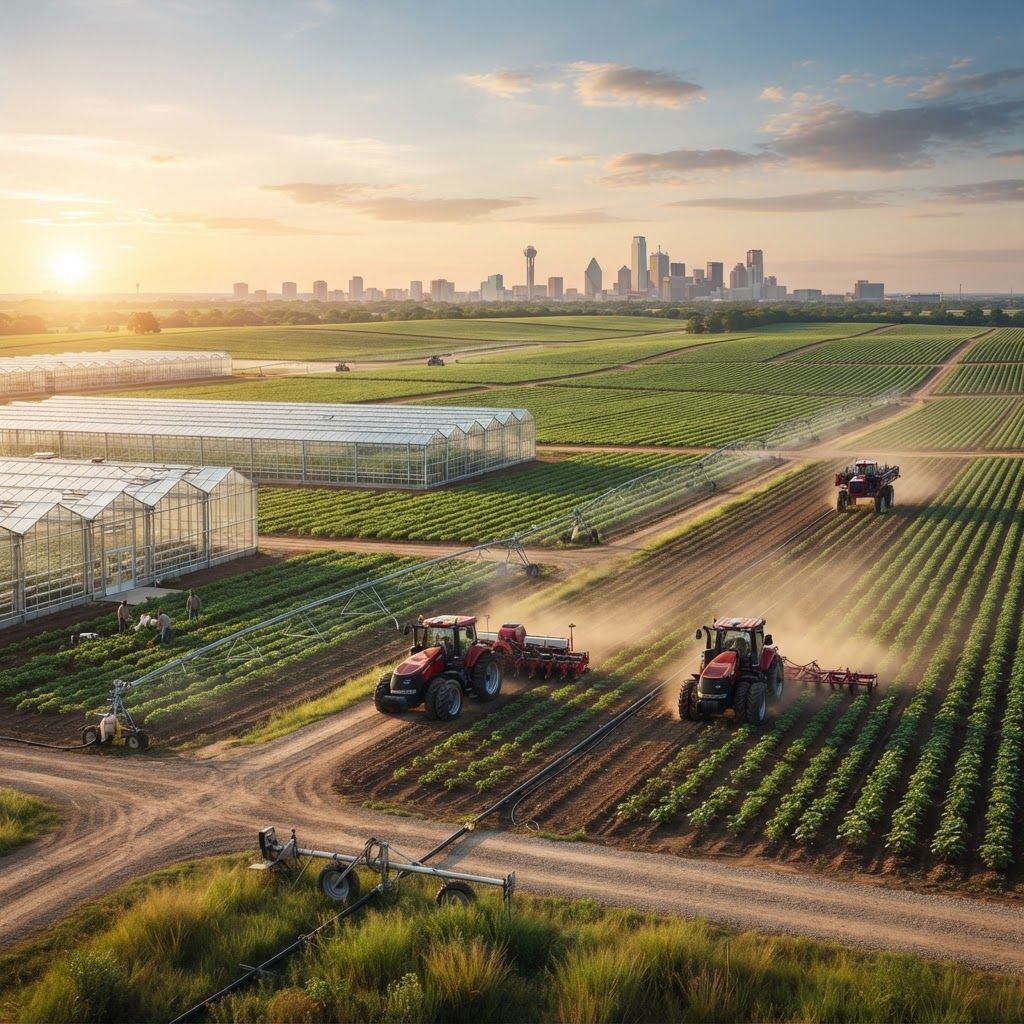
Agriculture in and Around Dallas
Dallas is known for finance, technology, and logistics, yet agriculture remains important across North Texas. The wider region includes cattle operations, hay and grain production, vegetable farms, nurseries, urban agriculture, and companies that supply seed, feed, equipment, processing, and crop services. Population growth has increased interest in local food while also placing pressure on farmland and water resources.
The term farming company can include direct producers as well as agribusinesses that make commercial farming possible. The organizations below represent different parts of the Dallas and North Texas agricultural economy. Availability, ownership, and visitor access should be confirmed directly.
1. Bonton Farms
Bonton Farms is a well-known urban agriculture organization in South Dallas. Its work combines food production with community development, employment, health, and neighborhood investment. The farm demonstrates how agriculture can address food access and create economic opportunity inside a major city.
2. Restorative Farms
Restorative Farms focuses on urban farming, training, and local food systems in Dallas. Its model emphasizes practical growing skills and community-based production. Such operations are increasingly relevant as cities seek shorter supply chains, fresher produce, and productive uses for underutilized land.
3. Eden's Organic Garden Center and CSA Farm
Eden's Organic Garden Center and CSA Farm serves the North Texas community with organically grown produce and community-supported agriculture. CSA programs give farms more predictable seasonal revenue while customers receive a rotating harvest. The model also encourages consumers to understand regional seasonality.
4. Comeback Creek Farm
Comeback Creek Farm is a North Texas producer known for high-quality vegetables supplied to chefs and local customers. A farm-to-chef focus rewards freshness, careful variety selection, and close communication with kitchens. Specialty farms like this strengthen Dallas dining by providing distinctive regional ingredients.
5. Profound Foods
Profound Foods connects North Texas farms with restaurants and consumers through local food distribution. Although it functions as an aggregator rather than a single farm, it is important to the farming ecosystem because small producers often need efficient market access. Aggregation can simplify ordering for chefs while preserving farm identity.
6. Reeves Family Farm
Reeves Family Farm is a North Texas family operation associated with seasonal produce and direct-market sales. Family farms contribute variety to the regional food system and often build customer loyalty through farmers markets. Crop availability naturally changes with weather and season.
7. Good Local Markets
Good Local Markets operates producer-focused markets in Dallas. It is not itself a farm, but it gives local growers and food makers a dependable sales channel. Strong farmers markets help new agricultural businesses test products, receive direct feedback, and retain a greater share of the retail price.
8. Cargill
Cargill is a global agribusiness with operations and commercial relationships throughout Texas. Its activities span animal nutrition, food ingredients, commodity supply chains, and agricultural services. Large firms like Cargill influence how regional producers access feed, processing, risk management, and national markets.
9. Helena Agri-Enterprises
Helena Agri-Enterprises supplies crop production inputs and services, including seed, fertilizer, crop protection, and agronomic support. For commercial farms around North Texas, technical guidance and timely input availability can directly affect yield and cost. Responsible application and resistance management remain essential.
10. Nutrien Ag Solutions
Nutrien Ag Solutions serves growers with fertilizer, seed, crop protection products, and digital agronomy tools. Its distribution scale supports commercial agriculture across Texas. Precision recommendations and field data are becoming more important as farms seek to use water and inputs efficiently.
Trends Shaping Dallas Agriculture
Water management is a defining issue. North Texas farms must navigate heat, variable rainfall, and competition for water. Drip irrigation, soil-moisture monitoring, protected cultivation, and drought-aware crop planning can improve resilience. Urban and peri-urban farms are also using compact production methods to serve customers close to harvest.
Technology is expanding across the sector through GPS guidance, remote sensing, farm-management software, and more precise input application. At the same time, consumers increasingly value traceability and local identity. Successful farming companies combine sound agronomy with disciplined finance, labor planning, food safety, and market relationships.
How Buyers Can Support Regional Farms
Restaurants and retailers should communicate volume needs early, accept seasonal substitutions, and pay on dependable terms. Consumers can support growers through CSA memberships and producer-focused markets. When evaluating a farm or agricultural supplier, consider production practices, consistency, transparency, and the business's contribution to a durable local food system. Dallas agriculture is diverse, and its future depends on collaboration between growers, distributors, institutions, and informed customers.
Practical Due Diligence Before Ordering
Before opening an account, ask each business for its current trade requirements, service area, minimum purchase, payment terms, lead times, and written return policy. Company offerings can change, so confirm that the products and support described here remain available. New buyers should begin with a measured order and assess accuracy, packaging, product consistency, and communication before making a larger commitment. References from comparable Dallas businesses can provide useful insight into real-world service.
Create a simple supplier scorecard and review it after every delivery. Useful measures include on-time performance, complete-order rate, defect frequency, response time, and the total cost after freight, handling, waste, and returns. Keep purchase orders, specifications, lot or model details, and approval records organized. Clear documentation makes discrepancies easier to resolve and helps multiple employees follow the same buying standards.
Finally, avoid depending entirely on one source for critical inventory. Dallas has strong logistics infrastructure, but severe weather, transportation interruptions, seasonal demand, and manufacturer shortages can still affect supply. Maintain a qualified secondary vendor and identify acceptable substitutes before they are urgently needed. Forecast from actual sales or usage data, review slow-moving stock, and share upcoming demand with suppliers. This disciplined approach turns a directory of possible vendors into a resilient purchasing strategy and helps a business build relationships based on quality, transparency, and dependable long-term value.