
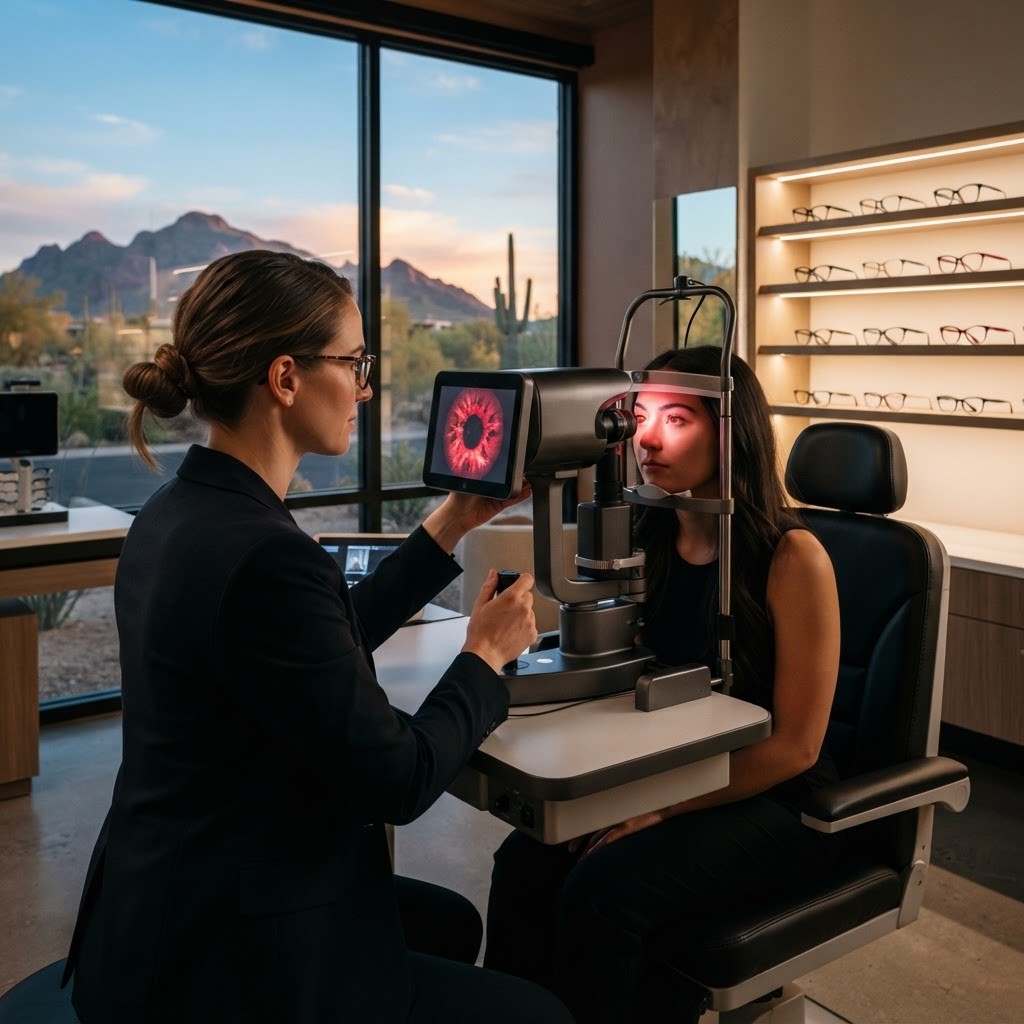
Choosing Eye Care in Phoenix
Eye care ranges from routine vision exams and contact lens fitting to urgent retinal treatment and complex surgery. Phoenix residents should first understand whether they need an optometrist, ophthalmologist, or subspecialist. Diabetes, glaucoma risk, sudden symptoms, childhood vision issues, and previous surgery can all change that decision. The Valley has academic programs, large physician groups, specialty institutes, and retail vision providers. The following organizations are notable options, but individual clinician expertise and the patient’s diagnosis should guide selection.
1. Barnet Dulaney Perkins Eye Center
Barnet Dulaney Perkins is a longstanding Arizona eye care group associated with cataract, refractive, corneal, glaucoma, retina, and general ophthalmic services. Multiple locations and surgical capabilities make it a prominent Valley provider. Patients considering a procedure should ask which surgeon will provide care, what technology is recommended, and whether premium options are medically necessary or elective.
2. Arizona Eye Specialists
Arizona Eye Specialists brings together ophthalmologists and optometrists across several areas of care. Its breadth can help patients move from routine evaluation to specialty management within one group. Services and subspecialists vary by office, so the correct location matters. Patients with chronic conditions should ask how testing, follow-up intervals, and urgent concerns are coordinated.
3. Southwestern Eye Center
Southwestern Eye Center serves Arizona through a broad network and offers medical, surgical, and vision services. The group’s reach is useful for patients seeking access across different communities. Cataract care, glaucoma, retina services, and routine eye health are among the areas commonly associated with the organization. Verify clinician specialty and facility details when scheduling.
4. Associated Retina Consultants
Associated Retina Consultants focuses on diseases of the retina and vitreous, including conditions that may threaten sight. Subspecialty training and access to imaging, injections, surgery, and clinical research distinguish retina practices from routine vision centers. Patients are often referred by another eye professional. Sudden flashes, a curtain-like shadow, or abrupt vision loss can require urgent assessment rather than a standard appointment.
5. Horizon Eye Specialists & LASIK Center
Horizon Eye Specialists provides medical eye care and refractive services in the Valley. Patients interested in LASIK or other elective vision correction should expect a detailed candidacy evaluation, discussion of alternatives, and realistic explanation of potential side effects. The practice’s combined medical and refractive scope can help identify conditions that affect suitability. Price should never be the only factor in selecting surgery.
6. Nationwide Vision
Nationwide Vision is a familiar Arizona provider for eye exams, glasses, and contact lenses, with numerous locations. Its accessibility and optical selection suit routine vision needs for many families. Some medical concerns may require referral to an ophthalmologist or subspecialist. Customers should clarify what an exam includes, how retinal health is evaluated, and the terms of eyewear warranties or lens upgrades.
7. Visionworks
Visionworks combines optometric exams with a large retail eyewear operation. Broad frame selection, promotions, and convenient scheduling are central advantages. It is practical for routine prescriptions and eyewear purchases, subject to local availability. Patients with complex disease should ensure appropriate medical follow-up beyond a basic refraction and retail visit.
8. Arizona Retinal Specialists
Arizona Retinal Specialists is another focused option for retinal and macular conditions. Specialty centers use advanced imaging to monitor diseases such as macular degeneration, diabetic retinopathy, and retinal tears. Care can involve repeated treatment and close follow-up, making location and communication important. Patients should ask about after-hours instructions and coordination with their primary eye doctor.
9. Phoenix Children's Ophthalmology
Phoenix Children's provides pediatric ophthalmology for infants, children, and adolescents with medical or surgical eye conditions. Pediatric expertise is important for development-related concerns, eye alignment, congenital disorders, and examinations that require child-specific techniques. Families should ask about referral needs, preparation, and how the team supports children who are anxious or have additional sensory needs.
10. Midwestern University Eye Institute
Midwestern University Eye Institute offers care in an academic clinical environment involving optometry education and faculty supervision. Teaching clinics can provide comprehensive evaluation while contributing to professional training. Appointments may follow a more detailed educational process and can take longer than retail visits. Patients should confirm services, insurance, and whether a specialty clinic matches their concern.
How to Compare Eye Care Providers
Confirm professional credentials and experience with the exact condition or procedure. Ask which tests are needed, how frequently follow-up occurs, and what symptoms require immediate attention. For glasses, compare lens material, coatings, fitting, adaptation, and warranty—not frames alone. For surgery, request information about realistic outcomes, alternatives, risks, postoperative care, and total fees. Insurance coverage for medical eye disease may differ from routine vision benefits.
Protecting Vision in the Desert
Phoenix’s intense sunlight, dust, dry air, and allergy seasons can affect comfort. Quality ultraviolet protection, appropriate eye protection, hydration, and clinician-guided treatment for dryness may help. Contact lens wearers should follow hygiene instructions carefully and avoid using non-sterile water. Sudden vision loss, eye trauma, severe pain, or new neurological symptoms require urgent professional evaluation. This article offers general information, not diagnosis or medical advice.