
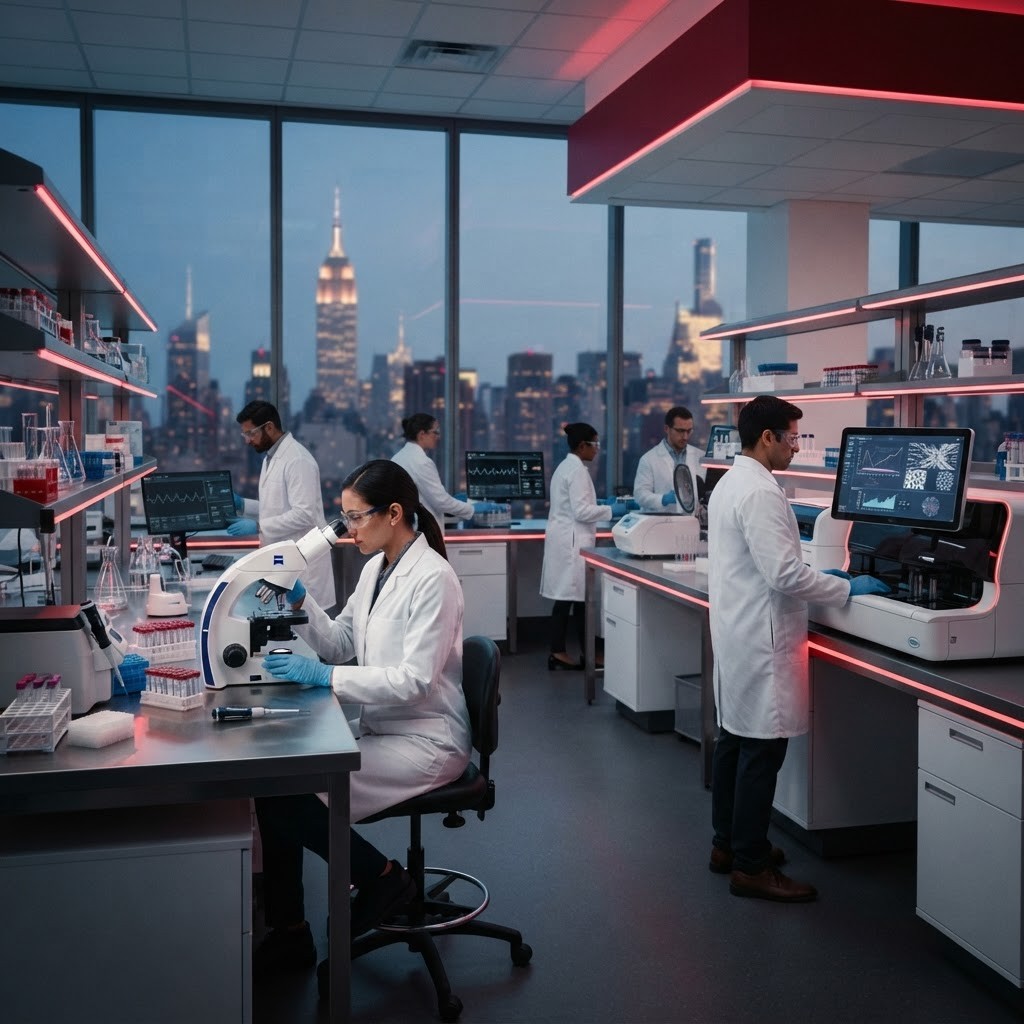
Why Laboratory Choice Matters
Diagnostic laboratories influence decisions across preventive care, infection management, cancer treatment, pregnancy, chronic disease, and many other areas. Accurate results require validated methods, trained personnel, proper identification, careful specimen handling, and clear communication. Convenience matters, but the ordering clinician’s requirements and the patient’s insurance network should guide the choice.
This list includes national laboratories, hospital-based systems, public services, and specialized providers with New York relevance. Not every lab accepts walk-ins or outside orders, and not every location performs every test. Patients should use a licensed clinician to interpret results and seek urgent care when symptoms demand it; a result viewed without context can be misleading.
1. Quest Diagnostics
Quest Diagnostics operates a broad network of patient service centers and performs routine, advanced, and specialized testing. Online appointments and result access can make the process efficient. Its scale is useful for common physician-ordered tests, but patients should verify that both the location and requested test participate in their insurance network.
2. Labcorp
Labcorp is another major national provider with New York collection sites and a wide testing menu. It supports routine bloodwork, pathology, genetics, and specialty diagnostics through different divisions. Appointment scheduling, electronic results, and national reach are practical advantages. Preparation instructions and coverage should be confirmed before specimen collection.
3. Northwell Health Labs
Northwell Health Labs supports a large regional health system and offers patient service centers across the New York area. Integration can benefit patients whose clinicians and records are within Northwell, reducing manual transfers. The laboratory provides routine and sophisticated services, while individual locations may have different hours, pediatric capabilities, and test availability.
4. NYU Langone Clinical Laboratories
NYU Langone’s laboratory services support its hospitals, outpatient network, and specialty programs. Academic integration is valuable for complex care where pathology and laboratory findings must be reviewed by multidisciplinary teams. Patients generally use these services within an NYU Langone care pathway and should follow the ordering office’s collection instructions.
5. NewYork-Presbyterian Laboratory Services
NewYork-Presbyterian provides clinical laboratory and pathology support across major campuses and affiliated care settings. Its connection to Columbia and Weill Cornell specialists can be important for advanced diagnostics and hospital care. Access and external specimen policies depend on the specific site, department, and clinical relationship.
6. Mount Sinai Laboratory Services
Mount Sinai’s laboratories support inpatient, outpatient, and specialty testing throughout its health system. Academic pathology expertise can aid difficult diagnoses, particularly when laboratory results must be integrated with imaging, procedures, and specialist review. Patients should use the collection location specified by their care team and ask how results will be communicated.
7. Memorial Sloan Kettering Clinical Laboratories
Memorial Sloan Kettering’s laboratories and pathology teams are highly specialized in cancer care. Molecular testing, tissue analysis, blood studies, and disease-specific interpretation contribute to diagnosis and treatment planning. These services are generally part of an oncology care pathway rather than a neighborhood walk-in option, and their value lies in focused expertise and multidisciplinary integration.
8. BioReference Laboratories
BioReference Laboratories provides clinical testing with experience in routine diagnostics, women’s health, genetics, and other specialized areas. Its services are commonly accessed through clinicians and collection arrangements. Patients should confirm the exact billing entity, insurance coverage, and whether a particular specimen requires a dedicated location or scheduled collection.
9. Enzo Clinical Labs
Enzo Clinical Labs has served the New York metropolitan region with routine and esoteric laboratory testing. Local market experience and provider relationships can make it a practical option where available. Since laboratory networks and ownership structures can evolve, patients should verify current locations, branding, insurance participation, and result-access procedures.
10. New York City Public Health Laboratory
The New York City Public Health Laboratory performs essential population-level and specialized testing tied to disease surveillance, outbreak response, and public health programs. It is not a conventional consumer walk-in laboratory. Its inclusion recognizes the critical diagnostic infrastructure operating behind the city’s response to infectious diseases and other public health threats.
Preparing for a Lab Visit
Bring the test order, identification, insurance information, and any required forms. Follow fasting, medication, timing, hydration, and collection instructions exactly, but do not stop prescribed medication unless a qualified clinician tells you to do so. Ask whether the test requires an appointment, special handling, or a particular time of day.
Before testing, clarify who will receive the results, when they are expected, and whom to contact with questions. Unexpected or abnormal values do not always indicate disease; trends, symptoms, and reference ranges matter. A strong diagnostic laboratory combines technical quality with correct identification, transparent access, secure reporting, and dependable communication between patient and clinician. Patients can reduce errors by confirming their full name and date of birth at collection, checking that every ordered test is listed, and labeling any home-collected specimen exactly as directed. Keep the collection receipt until results have been received and reviewed.