
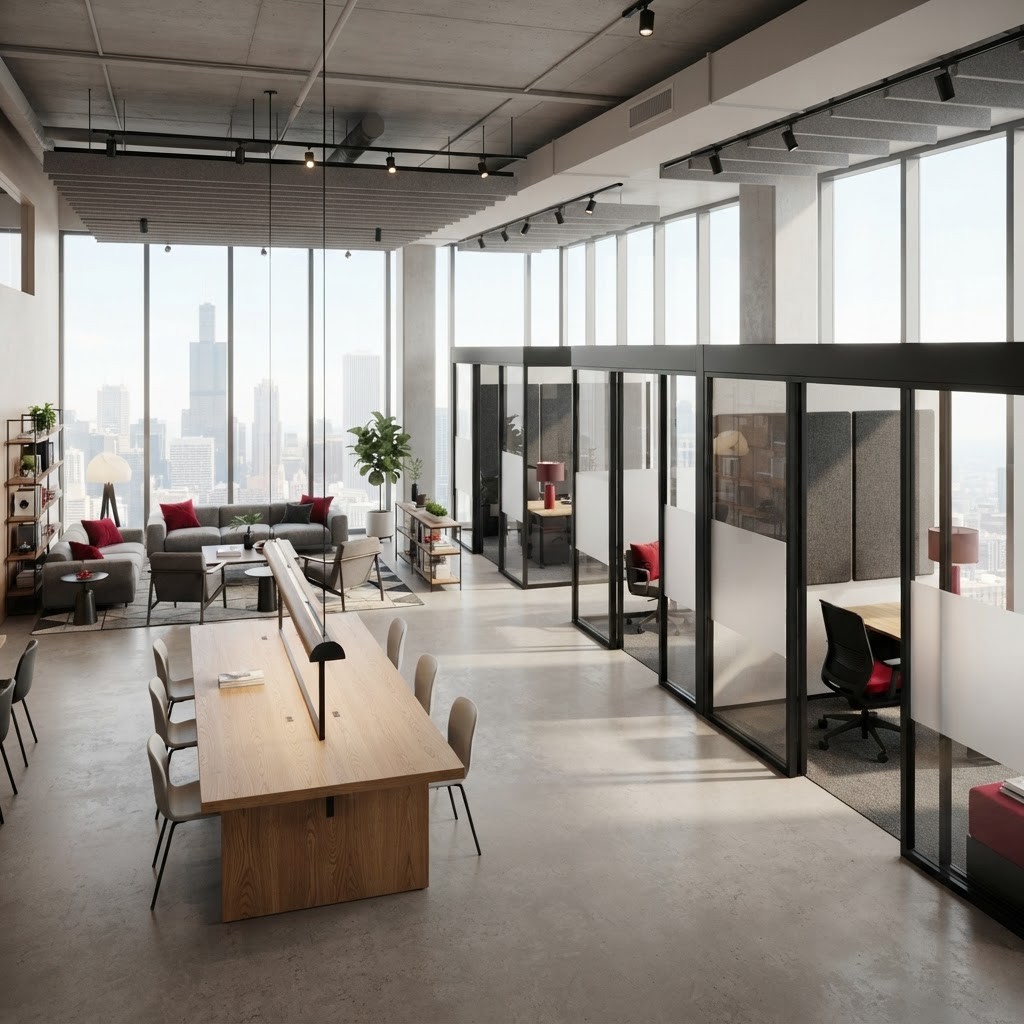
Flexible Work Across Chicago
Co-working has matured from rows of shared desks into a broad category that includes quiet professional offices, hospitality-inspired clubs, startup communities, enterprise suites, and neighborhood workspaces. Chicago is especially well suited to flexible work because its transit network connects major business districts with distinct residential neighborhoods. A freelancer in Logan Square, a legal consultant in the Loop, and a growing technology team in Fulton Market may all define the ideal workspace differently.
When comparing memberships, look beyond attractive lounges. Internet reliability, call privacy, meeting-room access, guest policy, business hours, printing, security, and total fees affect daily value. Test the commute and noise level during the hours you expect to work. The following operators offer noteworthy options across Chicago.
1. Industrious
Industrious is known for hospitality-oriented service, polished interiors, private offices, and shared lounges in prominent buildings. Its Chicago locations appeal to professionals and teams that want a refined environment suitable for client meetings. Community staff and thoughtfully managed common areas distinguish the experience from a basic office rental.
2. WeWork
WeWork provides broad location choice, recognizable design, private offices, meeting rooms, and flexible arrangements. Chicago members can benefit from access to multiple business districts and a large professional community. Because location layouts and crowd levels differ, prospective members should tour the specific floor and workspace they would use.
3. 1871
1871 is a major Chicago innovation hub rather than simply a place to rent a desk. It supports entrepreneurs through community, education, mentors, events, and connections across the technology ecosystem. Founders who actively engage with programming may receive substantially more value than those seeking only a quiet office.
4. Guild Row
Guild Row combines work, making, dining, and social community in a distinctive neighborhood setting. Its environment is less corporate than a downtown suite and appeals to creative professionals who value interaction and shared experiences. The concept demonstrates how co-working can support lifestyle and belonging alongside productivity.
5. Workbox
Workbox serves startups, small businesses, and professionals with co-working, private offices, and business support. Its Chicago roots and growth-focused community make it relevant for companies seeking introductions and practical resources. Teams should evaluate office privacy and expansion options as headcount changes.
6. Expansive
Expansive offers flexible offices and co-working in multiple Chicago buildings, including spaces with significant architectural character. Its model supports individuals and companies that want straightforward workspace with shared amenities. The variety of office sizes can make it easier for teams to grow without committing to a conventional long-term lease.
7. Servcorp
Servcorp emphasizes professional offices, virtual office services, reception support, communications infrastructure, and prestigious business addresses. It suits consultants, financial professionals, and international companies that prioritize a formal client-facing environment. Virtual offerings can also help businesses establish a Chicago presence without full-time space.
8. Carr Workplaces
Carr Workplaces provides serviced offices, meeting rooms, administrative support, and flexible memberships. The company’s approach is oriented toward a professional workplace experience with attentive service. It can be a good fit for users who need dependable meeting facilities and business support more than a startup social scene.
9. Second Shift
Second Shift brings co-working into a neighborhood context, serving remote workers, freelancers, and small teams seeking an alternative to commuting downtown. A community-scale space can offer familiarity and convenience that large corporate networks do not. It is particularly useful for members who value a focused routine close to home.
10. Platform Coworking
Platform Coworking offers flexible shared and private workspaces with a local, approachable character. Neighborhood-oriented locations can reduce commute time while still providing separation between work and home. Prospective members should compare access hours, meeting credits, storage, and phone-call arrangements with their work habits.
What Chicago Workers Want Now
Hybrid schedules have increased demand for part-time access, team gathering space, and short commitments. Members want strong video-call infrastructure and acoustic privacy, not only fast internet. Wellness, natural light, outdoor space, bike access, and quality coffee also influence decisions. Meanwhile, companies use flexible offices to test new markets or give distributed employees a shared base without carrying underused space.
Community remains a differentiator, but it should be evaluated realistically. Ask how often events occur, who attends, and whether introductions are actively facilitated. Some people thrive in a social environment; others need silent concentration. A space that matches work style will usually outperform one chosen for visual appeal alone.
Choosing a Membership
Work from the space for a trial day if possible. Make a video call, use the internet, visit common areas, and assess temperature and chair comfort. Calculate the effective monthly cost of meeting rooms, printing, lockers, mail, guests, and after-hours access. Review cancellation terms and determine whether a dedicated desk or private office provides meaningful benefits over open seating.
Chicago’s best co-working space is the one that removes friction from the workday. For some, that means enterprise-grade service in the Loop; for others, it is a founder network or a welcoming desk a few blocks from home. By matching location, privacy, community, and total cost to actual routines, professionals can choose flexible space that improves focus and creates room to grow.