
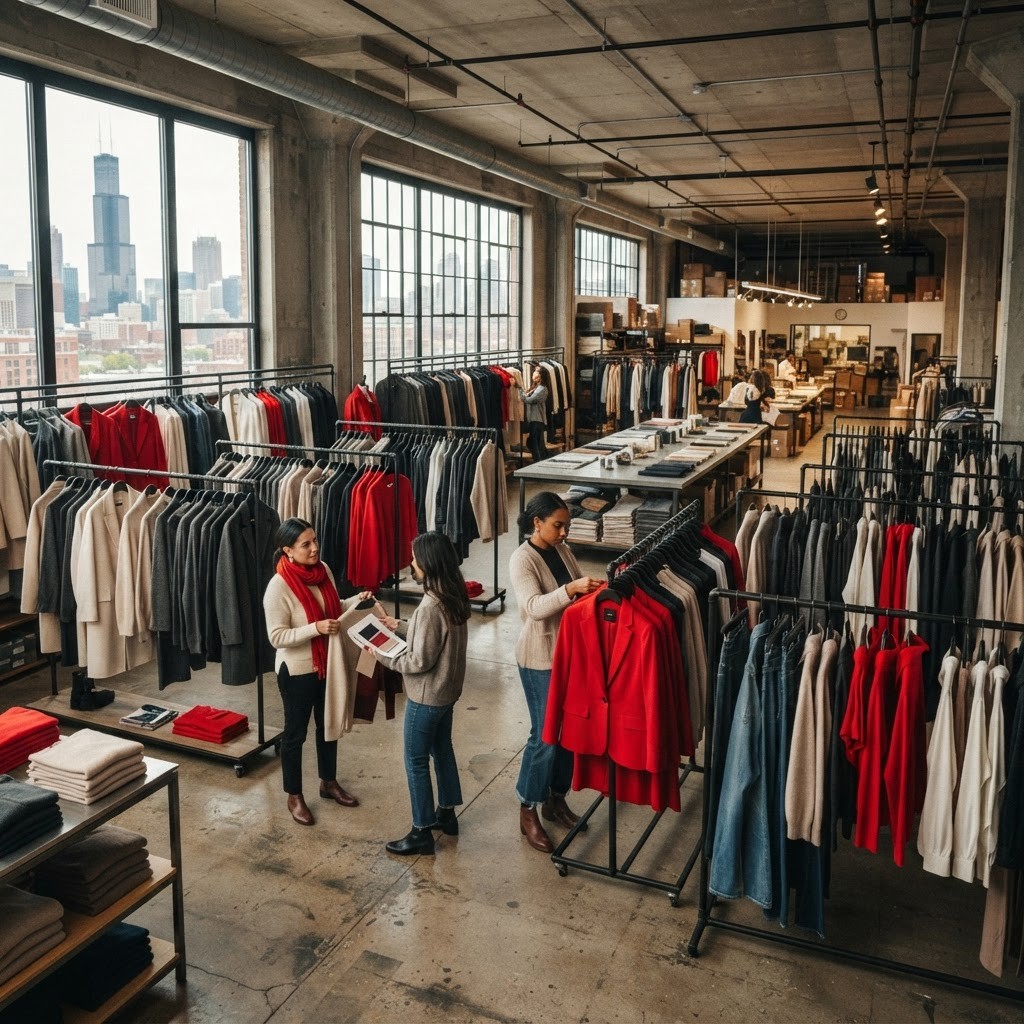
Chicago's Apparel Wholesale Landscape
Chicago's retail diversity, central shipping access, and large base of printers, embroiderers, boutiques, and corporate buyers support an active clothing wholesale market. Some distributors specialize in blank T-shirts and fleece for decoration, while others offer fashion assortments, uniforms, workwear, accessories, or closeout inventory. Buyers can often combine local showroom visits with efficient Midwest distribution.
Choosing a wholesaler requires clarity about the customer and sales channel. Fashion boutiques may prioritize limited runs and frequent newness, while uniform programs require continuity, inclusive sizing, and repeatable colors. Decorators need stable fabric surfaces and inventory depth. Review account requirements, minimums, return policies, size ratios, restocking schedules, and brand authorization before committing.
1. AlphaBroder
AlphaBroder supplies blank apparel, headwear, bags, and accessories to decorators and promotional-product businesses serving Chicago. Its portfolio includes basics, performance garments, workwear, and retail-inspired styles from numerous brands. Broad inventory and distribution capabilities help customers consolidate orders. Digital inventory tools are especially useful when managing programs with many sizes, colors, and decoration deadlines.
2. SanMar
SanMar is a major wholesale source for imprintable apparel and accessories in the Chicago market. It supports screen printers, embroiderers, promotional distributors, and uniform providers with extensive style and color options. The company is known for operational consistency and curated brand families. Buyers running ongoing programs value products likely to remain available across seasons rather than disappearing after one fashion cycle.
3. S&S Activewear
Bolingbrook-based S&S Activewear has become one of the most prominent apparel wholesalers in the country. Its Chicago-area roots, broad selection, and modern distribution operations make it a natural choice for local decorators. The catalog spans basic tees, fleece, performance wear, outerwear, headwear, and premium labels. Fast access to inventory helps shops respond to events and client orders with limited lead time.
4. TSC Apparel
TSC Apparel serves the decorated-apparel market with blank garments and accessories across a range of price points. It is relevant to Chicago businesses sourcing products for schools, teams, companies, nonprofits, and merchandise brands. A strong wholesale partner helps decorators compare fabric weight, fit, color consistency, and print compatibility. TSC's industry focus supports these practical decisions.
5. Augusta Sportswear Brands
Augusta Sportswear Brands supplies team uniforms, athletic apparel, outerwear, and spiritwear through wholesale channels. Chicago schools, leagues, clubs, and decorators can use its coordinated products to build consistent programs across sports and age groups. Performance garments require attention to movement, moisture management, decoration technique, and replenishment. The company's category depth is a key differentiator.
6. Carolina Made
Carolina Made distributes imprintable apparel, workwear, bags, and accessories to businesses serving the Chicago region. Its assortment supports promotional campaigns, staff apparel, and custom merchandise. Buyers can compare brands and garment constructions through one account rather than establishing many direct relationships. Service, inventory accuracy, and shipping reliability are central considerations for deadline-driven decorators.
7. Royal Apparel
Royal Apparel offers wholesale basics with an emphasis on domestic production, organic materials, and fashion-forward fabric options. Chicago brands seeking a differentiated blank may appreciate alternatives to standard promotional tees. Softer fabrics, contemporary fits, and manufacturing origin can strengthen a premium merchandise story. Buyers should sample garments and test decoration because specialty blends respond differently to inks and heat.
8. Tasha Apparel
Tasha Apparel supplies fashion clothing and accessories to boutiques and online retailers, including businesses in Chicago. Its model favors trend-responsive assortments and accessible packs for independent sellers. Boutique buyers benefit from reviewing measurements, fabric details, and pack ratios rather than relying only on styled imagery. Frequent small buys can reduce fashion risk while keeping inventory fresh.
9. Bloom Wholesale
Bloom Wholesale focuses on women's boutique apparel and serves independent retailers that want approachable, saleable styles. For Chicago shops, a wholesaler of this kind can complement local market buying with regular online releases. Retailers should consider how each assortment fits their established customer, climate, and price architecture. Consistency in fit and quality is essential for repeat online sales.
10. Wholesale Fashion Square
Wholesale Fashion Square carries trend-driven apparel and accessories for boutiques and resellers. Its broad range can help a new seller test categories without developing private-label production. However, disciplined editing remains important: a coherent store identity usually performs better than an unrelated collection of trends. Buyers should calculate landed cost, expected markdowns, and return limitations before setting retail prices.
Wholesale Buying Best Practices
Order samples before making a large commitment. Check fit across several sizes, seam quality, fabric opacity, shrinkage, dye consistency, and care labeling. Decorators should run print or embroidery tests and verify whether coatings or high synthetic content require special techniques. Fashion retailers should track sell-through by silhouette, color, size, and vendor so future buys reflect evidence rather than intuition.
Apparel trends increasingly include recycled fibers, traceability, on-demand decoration, relaxed fits, and smaller inventory commitments. Sustainability also depends on durability and accurate forecasting; unwanted garments carry an impact regardless of fiber claims. Chicago buyers are well positioned to combine national wholesale networks with local creative talent and fast logistics. The best wholesaler will fit the business model, communicate stock honestly, and provide consistent products that customers are pleased to wear repeatedly.