Separating Influence From Takeover
There is no denying that artificial intelligence has spread rapidly across the marketing landscape. It powers content creation, ad optimization, audience targeting, personalization, analytics, and customer service. Given how pervasive it has become, it is fair to ask whether AI is taking over marketing entirely. The answer requires distinguishing between influence and takeover. AI is enormously influential, reshaping tools, workflows, and expectations. But taking over, in the sense of running marketing without human involvement, is a very different claim, and one the evidence does not support.
Marketing is being augmented by AI at a remarkable pace, yet it remains directed by people. AI handles more of the execution than ever before, while humans continue to own the strategy, creativity, judgment, and accountability that determine whether marketing actually succeeds. Understanding where AI's reach ends is just as important as recognizing how far it extends.
Lead the AI Era With AAMAX.CO
Making the most of AI's influence while keeping human strategy at the helm is where an expert partner shines. AAMAX.CO is a full service digital marketing company serving clients worldwide, and they help businesses deploy AI across their marketing without losing the human direction that makes campaigns effective. Their digital marketing services integrate automation, personalization, and analytics with seasoned strategy and creative oversight. Because their team understands both the power and the limits of AI, they help clients capture efficiency gains while maintaining quality, authenticity, and brand integrity. For businesses that want to lead in the AI era rather than be overwhelmed by it, their expertise provides a clear path forward.
How Deeply AI Has Penetrated Marketing
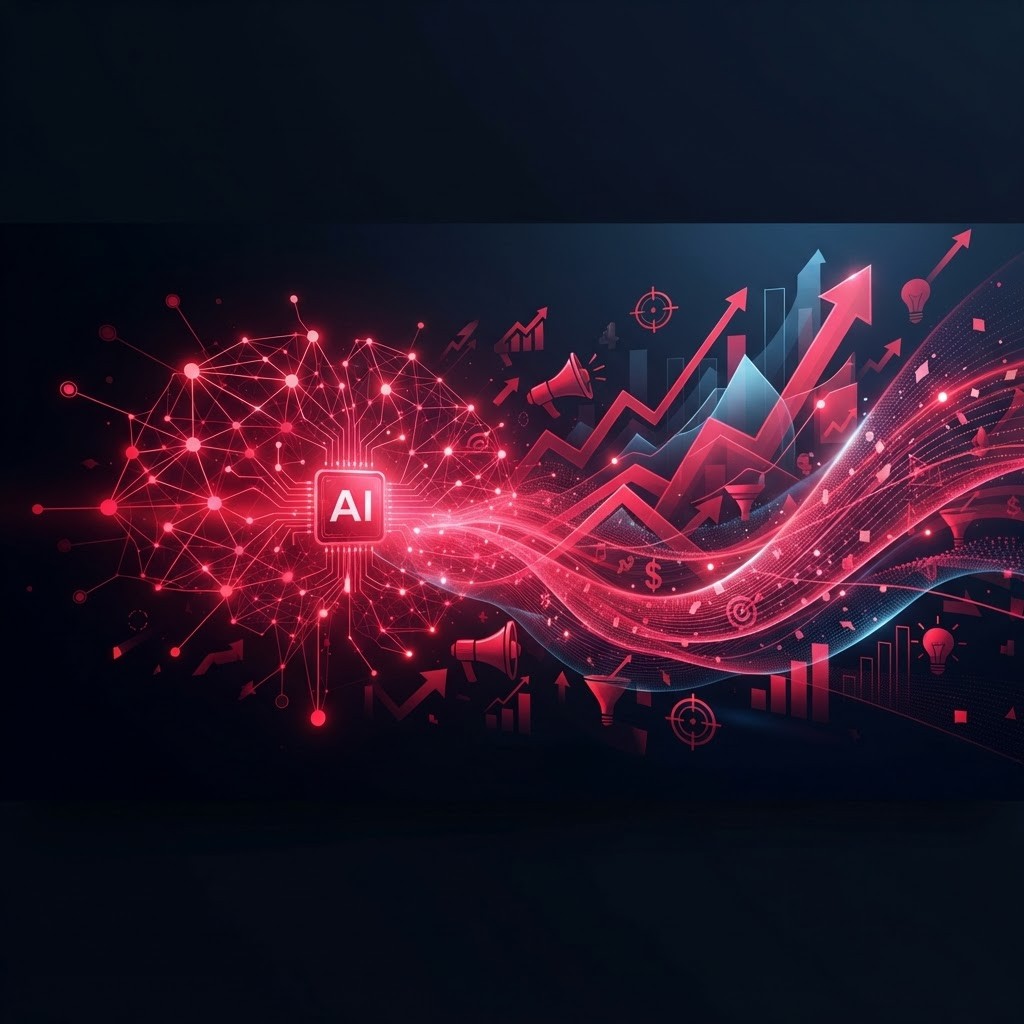
To appreciate the scope of AI's influence, consider how many marketing functions it now touches. In content, AI drafts articles, social posts, and ad copy, and generates images and video elements. In advertising, it manages bidding, targeting, and budget allocation in real time. In personalization, it tailors messages, product recommendations, and website experiences to individual users. In analytics, it processes massive datasets to surface insights and predict outcomes. In customer interaction, chatbots and virtual assistants handle inquiries around the clock.
This breadth is genuinely impressive and explains why the takeover question arises so often. Few areas of marketing remain untouched by AI in some form. The efficiency gains are real, and businesses that fail to adopt these tools risk falling behind competitors who embrace them. In that sense, AI has indeed taken over much of the tactical execution layer of marketing.
Where Humans Remain in Control
Yet execution is not the whole of marketing, and the layers above it remain firmly human. Strategy sits at the top. Deciding which markets to enter, how to position a brand, what story to tell, and how to allocate resources demands understanding and judgment that AI cannot provide. Creative vision is another human domain. AI can generate variations, but the original concepts that define memorable campaigns come from human imagination and cultural awareness.
Emotional intelligence remains essential, because effective marketing connects with human hopes and needs in ways that require genuine understanding, not statistical prediction. Relationships with clients, partners, and audiences depend on human trust. Ethical oversight and brand stewardship require people who can weigh consequences and take responsibility. And critical evaluation of AI's output, catching errors, ensuring quality, and aligning work with goals, is an ongoing human task. AI produces; humans decide, refine, and stand behind the result.
The Risks of Letting AI Take Over Unchecked
Handing too much control to AI carries real dangers. Content generated at scale without human oversight tends to be generic, blending into a sea of similar material and failing to differentiate a brand. AI can produce factual errors that damage credibility if published unchecked. Over automation can strip marketing of the authentic voice and emotional resonance that build loyalty. And relying blindly on AI recommendations without strategic judgment can lead to campaigns that are efficient but misaligned with business goals.
These risks illustrate why a full takeover would be counterproductive. The businesses that succeed are not those that remove humans from the loop, but those that combine AI's speed and scale with human oversight and creativity. The technology is a powerful engine, but it needs a skilled driver to reach the right destination.
The Emerging Human AI Partnership
The healthiest way to view the current moment is as the rise of a partnership rather than a takeover. AI takes on the repetitive, data heavy, high volume work, dramatically increasing productivity. Humans focus on strategy, creativity, emotional connection, and judgment, applying AI's output toward meaningful outcomes. New roles are emerging that formalize this partnership, from prompt specialists to professionals who optimize content for AI answer engines and oversee ethical AI use.
In this model, marketers who master AI become far more productive and valuable, while those who refuse to engage with it risk being left behind, not by AI itself but by peers who use it well. The competitive edge belongs to the human AI team, not to either one alone.
Conclusion
Is marketing being taken over by AI? AI has taken over much of the tactical execution, and its influence continues to grow across nearly every marketing function. But it has not taken over marketing itself, because strategy, creativity, emotional intelligence, relationships, and accountability remain firmly in human hands. The reality is a rapidly deepening partnership in which AI amplifies human capability rather than replacing it. Businesses and marketers who embrace this collaboration, using AI to handle scale while people provide direction and soul, will lead the AI era. The future of marketing is not machines instead of people, but machines empowering people to do their best work.