What Integrated Digital Marketing Really Means
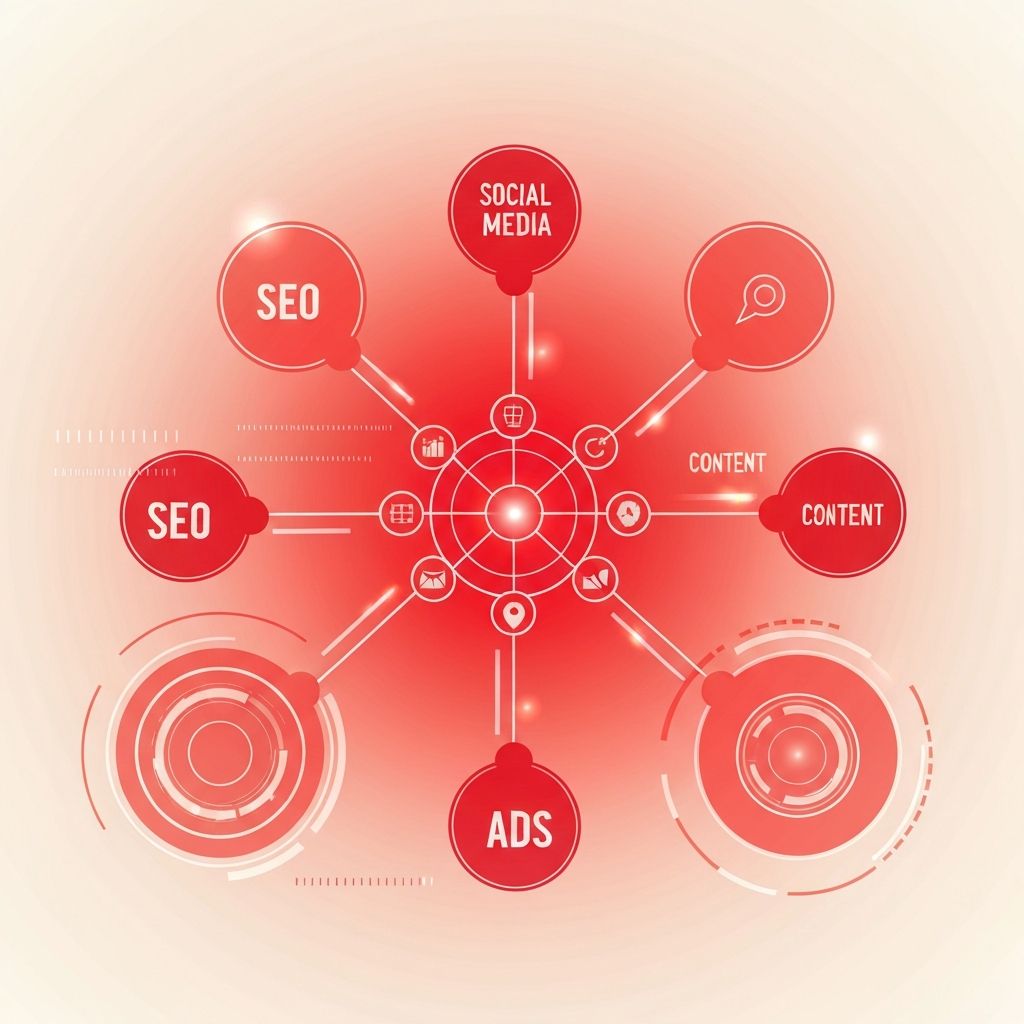
Integrated digital marketing solutions combine strategy, creative, channels, and analytics into one cohesive system rather than running each discipline in isolation. In a fragmented landscape where customers move fluidly between search engines, social platforms, email, podcasts, and AI assistants, siloed campaigns produce inconsistent messaging, wasted spend, and unreliable measurement. Integration ensures that every touchpoint reinforces a unified brand promise, every channel feeds the next, and every data point flows into a shared view of performance.
The benefits of integration are not theoretical. Brands that operate this way consistently produce higher returns on marketing investment because budget shifts to the channels that are working, creative iterates faster, and the customer experience feels seamless. This article explains the components of a fully integrated solution, the operating model required to run it, and how to evaluate readiness for the shift.
Hire AAMAX.CO for Integrated Digital Marketing Solutions
Brands that want one accountable partner for end-to-end execution can hire AAMAX.CO, a full service digital marketing company offering web development, digital marketing, and SEO services worldwide. Their integrated team brings strategy, creative, paid media, SEO, content, and analytics under one roof, which eliminates coordination overhead and accelerates iteration. They build campaigns that work together rather than in silos, and they report performance in unified dashboards that connect activity to revenue and brand outcomes.
The Foundations: Strategy and Audience
Integration begins with shared strategic foundations. A clear positioning statement, defined audience segments, mapped customer journeys, and an agreed-upon set of business outcomes ensure every channel and asset pulls in the same direction. Without these foundations, integrated execution devolves into committee work where competing priorities cancel each other out. Spending time at the start to align leadership on positioning, target segments, and growth math pays compounding returns throughout execution.
Search and Discovery
Search remains the largest single source of high-intent demand. Integrated programs combine traditional search engine optimization for sustained organic visibility with paid search for immediate capture of high-value queries. Increasingly, generative engine optimization is added to ensure brands appear in AI-driven answer engines like ChatGPT, Gemini, and Perplexity, which are quickly becoming a major discovery layer. Together these disciplines create a defensible presence across every modern search surface.
Paid Media Across Channels
Paid media in an integrated program is planned holistically, not channel by channel. Budgets flow toward the audiences and stages of the funnel where they produce the highest incremental return, which often means rebalancing spend between search, social, programmatic, connected TV, and influencer partnerships several times a year. Creative is briefed centrally so messaging is consistent across platforms, then adapted for each channel's native format. Measurement uses a combination of platform analytics, multi-touch attribution, and incrementality testing to assess true performance.
Content as the Connective Tissue
Content is the asset that powers every other channel. Long-form articles fuel SEO and serve as fodder for social posts. Video content drives YouTube and paid social engagement. Email newsletters nurture leads and customers. Whitepapers and webinars support sales conversations. An integrated content engine plans, produces, and repurposes assets so a single piece of foundational thinking shows up across many surfaces in formats appropriate to each. This dramatically increases ROI on every dollar invested in production.
Social Media as Brand and Community
Modern social media marketing is both a brand-building channel and a customer relationship layer. Integrated programs use organic social to humanize the brand, share thought leadership, and engage community, while paid social drives reach and conversion. Listening tools surface sentiment, emerging questions, and competitive moves, feeding insights back into strategy. Social customer service, when integrated with the broader support function, builds loyalty and reduces churn.
Lifecycle Marketing for Retention and Expansion
The most profitable growth often comes from existing customers, yet many brands underinvest in lifecycle marketing. Integrated programs design email and SMS sequences for onboarding, education, cross-sell, win-back, and advocacy. Personalization based on first-party data, including purchase history and engagement signals, lifts performance significantly. Retention metrics like repeat purchase rate, lifetime value, and net revenue retention are weighted equally with acquisition metrics in executive reporting.
Unified Analytics and Decision Cadence
Integration is impossible without unified analytics. A modern stack combines a privacy-conscious analytics platform, server-side tagging, a customer data platform, and visualization tools that pull data from every channel into shared dashboards. Decision cadences are equally important: weekly tactical reviews focus on creative performance and budget rebalancing, monthly strategic reviews assess channel mix and pipeline health, and quarterly business reviews tie marketing performance to overall company goals.
The Operating Model
Integrated execution requires more than the right channels; it requires the right operating model. Cross-functional pods that include strategy, creative, channel specialists, and analytics work better than discipline-based teams. Shared planning rituals, joint quarterly objectives, and a single source of truth for the brand prevent silos from re-forming. Digital marketing consultancy support is often valuable when transitioning from siloed to integrated operations because it brings outside experience and accelerates organizational change.
Conclusion
Integrated digital marketing solutions are no longer a luxury for the largest brands; they are the practical baseline for any organization that wants efficient, compounding growth in a fragmented landscape. By unifying strategy, search, paid media, content, social, lifecycle, and analytics into one coordinated engine, brands turn marketing from a cost center into a measurable growth function. Companies seeking a proven partner can engage AAMAX.CO to design and operate integrated programs aligned with their specific goals, audiences, and markets.